

Execution Framework: Read Cash Flow Statement for Business Owners
Reading a cash flow statement often feels like wading through a maze of numbers, but for South African business owners, knowing where your cash is actually going can make or break your future. Many assume profits tell the whole story. Not quite. The real shocker is that a business can show profit while actually running out of cash, just by missing how operating, investing, and financing activities line up on the statement. That one number in the right place can show whether your business will survive or stumble.
Table of Contents
- What Is A Cash Flow Statement?
- Key Sections Of Cash Flow Statement Explained
- Steps To Analyse Your Business Cash Flow
- Common Mistakes And Best Practices For Owners
Quick Summary
| Takeaway | Explanation |
|---|---|
| Understand cash flow statement basics | Familiarize yourself with the cash flow components: operating, investing, and financing activities for better financial insights. |
| Analyze cash flow over time | Compare cash flow statements across periods to identify trends, seasonal variations, and financial challenges effectively. |
| Focus on cash flow ratios | Regularly evaluate cash flow ratios like operating cash flow and free cash flow to measure financial health and stability. |
| Avoid common interpretation mistakes | Be cautious of confusing net income with cash flow and consider non-cash expenses when assessing cash availability. |
| Implement best cash flow practices | Continuously monitor cash flow and perform detailed analysis to proactively manage financial resources and anticipate challenges. |
What Is a Cash Flow Statement?
Understanding cash flow is critical for every business owner navigating the complex financial landscape of South African entrepreneurship. A cash flow statement serves as a financial compass, revealing exactly how money moves through your business during a specific accounting period.
The Fundamental Purpose of Cash Flow Statements
Learn more about financial reporting reveals that a cash flow statement provides a comprehensive snapshot of your business’s cash inflows and outflows. Unlike profit and loss statements that track revenue and expenses on an accrual basis, cash flow statements focus solely on actual cash movement.
According to Harvard Business School Online, the statement helps business owners understand the organization’s ability to generate cash and meet financial obligations. It breaks down cash activities into three primary categories: operating activities, investing activities, and financing activities.
Components of a Cash Flow Statement
The statement typically includes three key sections that provide a holistic view of your business’s financial health:
Here is a summary table capturing the three main components of a cash flow statement, along with examples of typical activities in each section. This will help business owners quickly reference and differentiate between Operating, Investing, and Financing Activities.
| Cash Flow Section | Description | Typical Activities/Examples |
|---|---|---|
| Operating Activities | Cash generated from core business operations | Sales receipts, supplier payments, wages |
| Investing Activities | Cash flows related to acquisition or sale of long-term assets | Equipment purchases, property sales |
| Financing Activities | Cash movements tied to raising or repaying capital | Loans, issuing shares, paying dividends |
- Operating Activities: Tracks cash generated from core business operations, including sales, payments to suppliers, and employee wages
- Investing Activities: Captures cash spent on or received from long-term assets like equipment purchases or property sales
- Financing Activities: Reflects cash movements related to debt, loans, shareholder investments, and dividend payments
As OpenStax’s Financial Accounting principles highlight, this statement enables users to determine how effectively a company’s income generates actual cash and predict potential future cash generation.
For South African business owners, the cash flow statement is more than just a financial document. It’s a strategic tool that provides insights into liquidity, financial flexibility, and the overall financial health of the enterprise. By understanding how to read and interpret these statements, entrepreneurs can make informed decisions about investments, expenses, and growth strategies.
Remember, a positive cash flow doesn’t just indicate profitability—it represents the lifeblood of your business, ensuring you have the resources to seize opportunities, manage challenges, and drive sustainable growth.
Key Sections of Cash Flow Statement Explained
For South African business owners, understanding the intricate details of a cash flow statement can transform financial management from a complex challenge to a strategic advantage. Each section of the cash flow statement reveals critical insights about your business’s financial dynamics and performance.
Operating Activities: The Core Cash Generation Section
Explore financial performance metrics to understand how operating activities represent the heartbeat of your business’s cash flow. This section captures cash generated from primary business operations, including customer payments, supplier expenses, and employee salaries.
According to Investopedia’s Financial Analysis, operating activities provide a clear picture of how effectively a company converts its revenues into actual cash. For South African entrepreneurs, this section answers crucial questions: Are we generating sufficient cash from our core business? Can we cover our day-to-day operational expenses?
Typical items in operating activities include:
- Cash received from customer sales
- Payments to suppliers and employees
- Interest and tax payments
- Operational expenses and overheads
Investing Activities: Understanding Capital Movements
Investing activities track cash flows related to long-term assets and strategic investments. This section reveals how your business allocates capital for future growth and sustainability. Harvard Business Review notes that investing activities demonstrate a company’s commitment to expansion and innovation.
Key components of investing activities encompass:
- Purchase or sale of property, plant, and equipment
- Investments in other businesses
- Acquisition of long-term assets
- Sale of investment securities
Financing Activities: Tracking Capital Structure
Financing activities illuminate how a business raises and repays capital. This section provides insights into shareholder interactions, debt management, and overall financial strategy. Whether you’re securing loans, issuing shares, or paying dividends, financing activities reveal the financial relationships sustaining your enterprise.
Important elements in financing activities include:
- Debt issuance and repayment
- Equity financing
- Dividend payments
- Shareholder transactions
By comprehensively understanding these three interconnected sections, South African business owners can gain powerful insights into their financial ecosystem. A nuanced reading of the cash flow statement transforms financial reporting from a compliance requirement into a strategic navigation tool, enabling more informed decision-making and sustainable business growth.
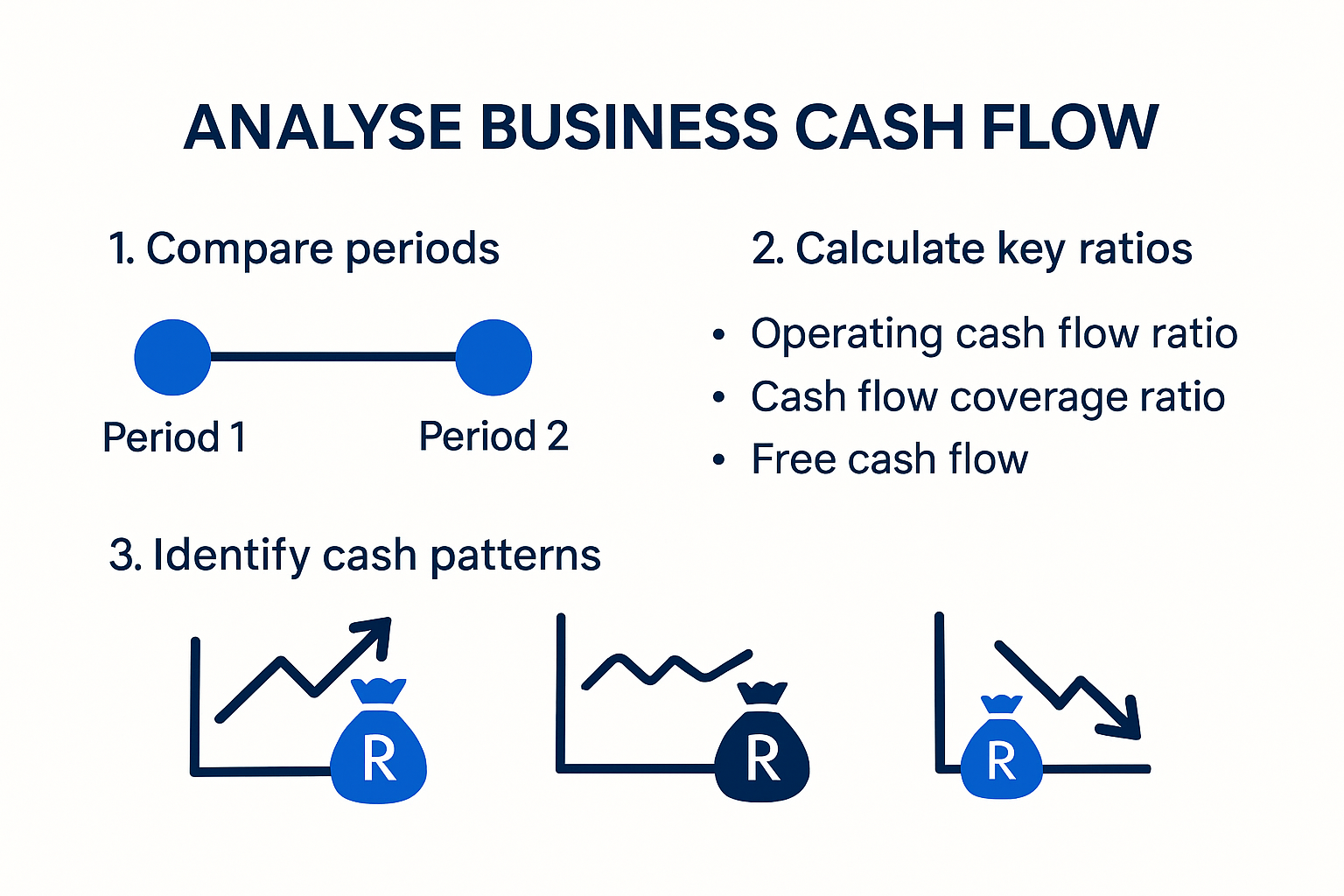
Steps to Analyse Your Business Cash Flow
Navigating your business’s financial health requires more than just glancing at a cash flow statement. South African entrepreneurs need a strategic approach to interpreting these critical financial documents and extracting meaningful insights that drive smart decision-making.
Comparative Analysis of Cash Flow Periods
Discover advanced financial performance techniques by understanding how comparative analysis transforms raw numbers into actionable business intelligence. According to Harvard Business School Online, comparing cash flow statements across multiple periods reveals critical trends and potential financial challenges.
Key comparative analysis strategies include:
- Tracking quarter-to-quarter cash flow changes
- Identifying seasonal variations in cash generation
- Monitoring consistent versus fluctuating cash flow patterns
- Assessing year-on-year financial performance
Evaluating Cash Flow Ratios and Metrics
Understanding specific financial ratios provides deeper insights into your business’s liquidity and financial stability. OpenStax’s Principles of Finance highlights several critical metrics that business owners should regularly examine:
- Operating Cash Flow Ratio: Measures your ability to cover short-term liabilities
- Cash Flow Coverage Ratio: Indicates capacity to meet debt obligations
- Free Cash Flow: Represents funds available after operational expenses and capital expenditures
Interpreting Cash Movement Patterns
The American Bar Association’s financial analysis guidance emphasizes the importance of understanding cash movement beyond simple numerical analysis. This involves examining the underlying reasons behind cash inflows and outflows across different business activities.
Strategic interpretation involves:
- Identifying consistent revenue streams
- Recognizing potential cash flow bottlenecks
- Understanding investment and financing activities’ impact
- Predicting future cash generation capabilities
For South African business owners, mastering cash flow analysis isn’t just about numbers—it’s about developing a comprehensive financial narrative. By systematically examining your cash flow statement, you transform financial data into a strategic roadmap for sustainable growth, risk management, and informed decision-making.
Remember, a nuanced understanding of your cash flow provides more than financial insights. It offers a clear picture of your business’s operational health, potential challenges, and opportunities for strategic investment and expansion.
Common Mistakes and Best Practices for Owners
Navigating cash flow statements requires more than technical knowledge—it demands strategic insight and careful attention to detail. South African business owners often encounter numerous pitfalls that can significantly impact their financial decision-making process.
Misinterpreting Cash Flow Metrics
Explore financial reporting strategies to understand the nuanced world of cash flow interpretation. According to Harvard Business School Online, many entrepreneurs make critical errors by confusing profitability with cash flow.
Common misinterpretation mistakes include:
- Assuming positive net income means strong cash position
- Overlooking non-cash expenses like depreciation
- Failing to distinguish between cash and accounting profits
- Ignoring working capital changes that impact actual cash availability
Best Practices for Cash Flow Management
The University of Denver’s Daniels College of Business highlights critical best practices for effective cash flow analysis. Understanding these strategies can transform how South African business owners approach their financial reporting.
Key best practices include:
- Regular Monitoring: Review cash flow statements monthly
- Detailed Footnote Analysis: Examine additional financial context
- Comparative Assessment: Compare current performance with historical data
- Proactive Cash Planning: Anticipate potential cash flow challenges
Avoiding Potential Financial Reporting Traps
The U.S. Securities and Exchange Commission’s guide emphasizes the importance of understanding the complete financial narrative beyond numbers.
Critical areas to watch include:
- Identifying one-time cash flow events
- Understanding seasonal business variations
- Recognizing potential cash flow constraints
- Developing robust financial forecasting mechanisms
For South African entrepreneurs, mastering cash flow statement interpretation is not just about avoiding mistakes—it’s about developing a strategic financial mindset. By understanding these common pitfalls and implementing best practices, business owners can transform their financial reporting from a compliance requirement into a powerful strategic tool.
This checklist table can help business owners ensure they follow best practices and avoid common mistakes when managing and interpreting cash flow statements.
| Area to Assess | Best Practice Example | Common Mistake Example |
|---|---|---|
| Profit vs Cash Flow | Focus on cash, not just profit | Assuming net income equals cash available |
| Non-Cash Expenses | Include depreciation & adjustments | Ignoring non-cash expenses |
| Statement Monitoring | Regular monthly review | Sporadic/infrequent checks |
| Footnote/Detailed Analysis | Analyse footnotes for context | Overlooking additional context |
| Comparative Assessment | Compare with previous periods | Failing to spot trends/changes |
| Recognising One-Time Events | Identify and plan for outliers | Treating unusual events as ongoing |
| Forecasting & Planning | Develop robust forecasts | Not preparing for future cash constraints |
Remember, a nuanced approach to cash flow analysis provides more than just numbers. It offers a comprehensive view of your business’s financial health, potential challenges, and opportunities for sustainable growth. Continuous learning and strategic interpretation are key to navigating the complex financial landscape of modern business.

Frequently Asked Questions
What is a cash flow statement?
A cash flow statement is a financial document that tracks the movement of cash in and out of a business over a specific period, helping owners understand their operating, investing, and financing activities.
Why is understanding cash flow important for business owners?
Understanding cash flow is crucial because it provides insights into a business’s liquidity, financial health, and ability to meet financial obligations, which can influence decisions on growth and investment strategies.
How can I analyze my cash flow effectively?
To analyze your cash flow effectively, compare cash flow statements over different periods, evaluate cash flow ratios, and interpret cash movement patterns to identify trends and potential financial challenges.
What are common mistakes to avoid when reading cash flow statements?
Common mistakes include confusing net income with cash flow, overlooking non-cash expenses like depreciation, and failing to recognize changes in working capital that impact actual cash availability.
Ready to Turn Cash Flow Confusion Into Clarity?
Many South African business owners struggle when their cash flow statements paint a different picture from their profit reports. If you are worried about missing warning signs in your operating, investing, or financing activities or find it tough to interpret your numbers for real insights, you are not alone. Our team at Ready Accounting specialises in translating confusing cash flow statements into practical business decisions that protect your business from nasty surprises.

Stop guessing and start leading with confidence. From cash flow analysis to full-service bookkeeping and statement preparation, we tailor solutions for your unique challenges. Visit our main site or see how our financial statement services help you build financial strength from day one. Book your free consultation now and give your business the professional support it deserves.