

Execution Framework: Read Financial Statements: Easy Protocol for 2025

Every business owner hears about financial statements, but most freeze up at the sight of those tables full of numbers. Most South Africans do not realise that mastering just four documents holds the key to making solid business calls. Here’s the thing that shifts perspective. A recent report found that businesses using real-time cloud accounting boosted financial accuracy by up to 40 percent. Turns out, understanding these financial snapshots is less about maths and more about unlocking practical growth for your business.
Table of Contents
- Understanding Key Financial Statements
- Step-By-Step Guide To Analysing Numbers
- Common Mistakes Small Businesses Make
- Using Cloud Tools For Financial Reporting
Quick Summary
| Takeaway | Explanation |
|---|---|
| Master the Four Financial Statements | Understanding the balance sheet, income statement, cash flow statement, and statement of changes in equity is crucial for gaining insights into the company’s financial health and making informed decisions. |
| Utilize Key Analysis Techniques | Employ horizontal and vertical analyses to detect trends and understand financial structures, allowing businesses to track performance over time and benchmark against industry standards. |
| Avoid Common Financial Mistakes | Small businesses should be cautious of record-keeping pitfalls, misclassification, and reconciliation challenges to maintain accurate financial statements and compliance with regulations. |
| Leverage Cloud Tools for Efficiency | Cloud accounting technologies enhance financial reporting by providing real-time data, automated processes, and improved collaboration, transforming financial management into strategic advantage. |
Understanding Key Financial Statements
Financial statements are the roadmaps that reveal a company’s financial journey, providing crucial insights into its performance, health, and potential. For business owners and investors in South Africa, mastering these documents is not just a skill but a strategic necessity.
The Four Pillars of Financial Reporting
Financial statements comprise four fundamental documents that work together to paint a comprehensive picture of a company’s financial ecosystem. According to the U.S. Securities and Exchange Commission, these critical statements include:
- Balance Sheet: A snapshot of what a company owns (assets), owes (liabilities), and the shareholders’ equity at a specific moment.
- Income Statement: Reveals the company’s revenues, expenses, and profitability over a specific period.
- Cash Flow Statement: Tracks the actual cash moving in and out of the business, showing liquidity and financial flexibility.
- Statement of Changes in Equity: Illustrates how the company’s net assets or ownership interests change over time.
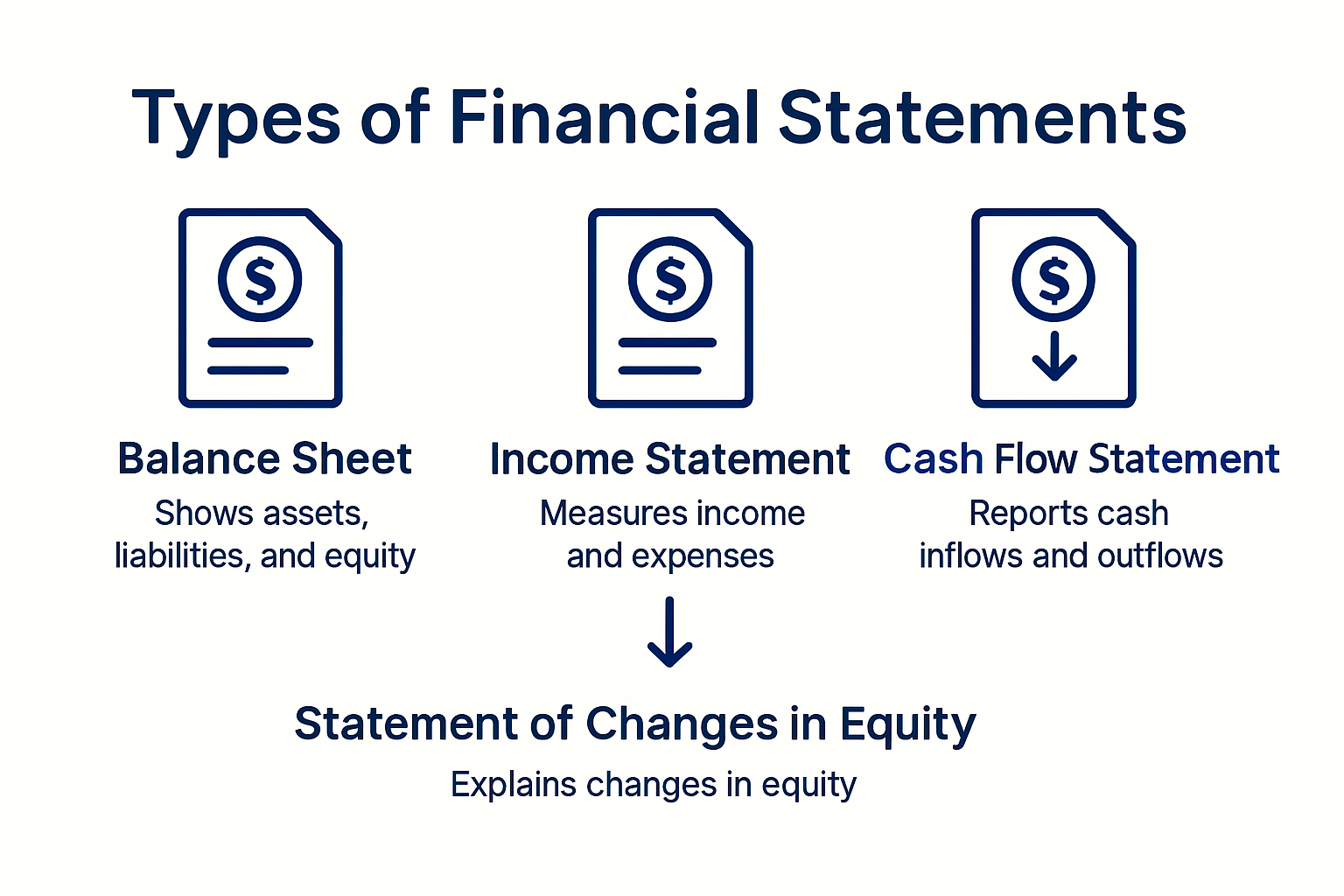
Here is a summary table highlighting the purpose and main focus of each of the four key financial statements:
| Financial Statement | Main Focus | What it Shows |
|---|---|---|
| Balance Sheet | Assets, Liabilities, Equity | What the company owns and owes |
| Income Statement | Revenue, Expenses, Profitability | How much profit or loss was made |
| Cash Flow Statement | Cash Inflows & Outflows | Actual cash movement (liquidity) |
| Statement of Changes in Equity | Owner’s Equity Changes | Changes in net assets/owner’s equity |
Reading Between the Financial Lines
Understanding financial statements requires more than just reading numbers. Harvard Business School Online emphasizes that these documents provide a narrative of a company’s financial strategy and performance. Each statement interconnects, offering different perspectives on financial health.
For South African businesses, these statements are not just compliance documents but strategic tools. They help in making critical decisions about investment, growth, tax planning, and financial reporting strategies. By analyzing these statements, businesses can:
- Understand their current financial position
- Identify potential financial risks
- Plan for future growth and expansion
- Demonstrate transparency to stakeholders and potential investors
Each financial statement tells a unique part of the business story. The balance sheet shows what the company owns and owes at a specific point. The income statement reveals how effectively the company generates profit. The cash flow statement demonstrates the company’s ability to generate cash and meet its obligations. The statement of changes in equity tracks how the company’s net worth evolves.
For South African entrepreneurs and business owners, these statements are more than academic exercises. They are critical tools for navigating the complex financial landscape, ensuring SARS compliance, and making informed strategic decisions.
Remember, financial statements are living documents. They change with every transaction, reflecting the dynamic nature of business. Regularly reviewing and understanding these statements can provide invaluable insights into your company’s financial trajectory.
Step-by-Step Guide to Analysing Numbers
Analysing financial statements is an art and science that requires methodical approach and strategic thinking. For South African businesses, mastering this skill can transform raw numbers into powerful insights that drive informed decision-making.
Preparing for Financial Analysis
Before diving into the numbers, preparation is key. The Association for Financial Professionals recommends establishing a comprehensive framework for financial statement analysis. This involves gathering all relevant financial documents, understanding the business context, and setting clear analytical objectives.
Start by collecting the following essential documents:
- Annual financial statements
- Previous years’ financial reports
- Industry benchmark data
- SARS tax reports
- Internal financial records
Key Analysis Techniques
Financial analysis involves multiple techniques that help unpack the story behind the numbers. According to OpenStax’s Principles of Financial Accounting, two primary analytical methods stand out:
Horizontal Analysis: This technique compares financial data across different time periods, tracking changes and identifying trends. By examining how specific line items have evolved over time, businesses can:
- Detect consistent growth patterns
- Identify potential financial challenges
- Understand the business’s financial trajectory
Vertical Analysis: This method examines each line item as a percentage of a base figure, typically total revenue or total assets. This approach helps businesses:
- Understand the proportion of different expenses
- Compare financial structures within the company
- Benchmark against industry standards

Below is a table comparing the two key financial analysis techniques discussed, to help you quickly see the differences and ideal use cases:
| Analysis Technique | What It Does | Main Purpose | When to Use |
|---|---|---|---|
| Horizontal Analysis | Compares figures across time periods | Detects trends and growth patterns | Year-on-year performance |
| Vertical Analysis | Expresses items as % of a base figure | Shows structure & internal proportion | Single-period comparisons |
Essential Financial Ratios
Financial ratios are powerful tools that transform raw numbers into meaningful insights. The U.S. Securities and Exchange Commission highlights several critical ratios for comprehensive financial analysis:
- Liquidity Ratios: Measure the company’s ability to meet short-term obligations
- Profitability Ratios: Evaluate the company’s capacity to generate earnings
- Efficiency Ratios: Assess how effectively the company uses its assets and resources
- Solvency Ratios: Determine the company’s long-term financial stability
For South African businesses, understanding these ratios is crucial. They provide insights beyond mere numbers, revealing the underlying financial health and potential risks. Learn more about financial reporting strategies to enhance your analytical skills.
Remember, financial analysis is not about perfect interpretation but continuous learning. Each set of financial statements tells a unique story, and developing the skill to read that story takes practice, patience, and a systematic approach. By following these steps and techniques, businesses can transform complex financial data into actionable strategic insights.
Common Mistakes Small Businesses Make
Navigating financial statements is challenging, especially for small businesses in South Africa. Understanding and avoiding common financial reporting mistakes can mean the difference between financial success and potential legal complications.
Record-Keeping Pitfalls
The SCORE Association highlights critical errors that can derail financial accuracy. One significant mistake is neglecting documentation. Small businesses often fail to save receipts, particularly those under R75, which can create significant challenges during tax season and financial audits.
Additionally, businesses frequently encounter issues with:
- Inconsistent expense tracking
- Mixing personal and business finances
- Inadequate record preservation
- Delayed financial documentation
Explore our comprehensive guide on avoiding bookkeeping errors to ensure your financial records remain pristine and compliant.
Misclassification and Reporting Errors
According to Maine Small Business Development Centers, misclassifying expenses and income is a prevalent issue. This can lead to inaccurate financial statements, incorrect tax submissions, and potential penalties from SARS.
Common misclassification problems include:
- Incorrectly categorizing employees versus contractors
- Misidentifying business expenses
- Creating overly complicated chart of accounts
- Inconsistent expense reporting
Financial Software and Reconciliation Challenges
Haworth & Company emphasizes the importance of regular bank reconciliations. Many small businesses overlook this critical process, which can result in undetected errors, potential fraud, and financial discrepancies.
Key reconciliation mistakes include:
- Infrequent bank statement reviews
- Not matching transactions systematically
- Failing to investigate discrepancies promptly
- Relying solely on accounting software without manual verification
For South African entrepreneurs, understanding these potential pitfalls is crucial. Financial statements are not just numbers on a page they are strategic tools that reflect your business’s health and potential. By avoiding these common mistakes, you can create more accurate, reliable financial documentation that supports informed decision-making.
Remember, prevention is always more cost-effective than correction. Invest time in developing robust financial processes, seek professional guidance when needed, and maintain a proactive approach to financial management. Your future business success depends on the accuracy and integrity of your financial reporting.
Using Cloud Tools for Financial Reporting
In the rapidly evolving landscape of financial management, cloud tools have revolutionized how South African businesses approach financial reporting. These innovative technologies offer unprecedented efficiency, accuracy, and accessibility for entrepreneurs and financial professionals.
The Evolution of Cloud Accounting Technologies
Research from cloud technology experts reveals a transformative shift in financial reporting methodologies. Cloud-based solutions are no longer just optional tools they have become essential infrastructure for modern businesses seeking competitive advantage.
Key benefits of cloud financial reporting tools include:
- Real-time financial data access
- Automated reporting capabilities
- Enhanced data security
- Seamless collaboration features
- Reduced operational costs
- Instant scalability
Below is a summary table outlining the key benefits of using cloud financial reporting tools, as described in this section:
| Benefit | Description |
|---|---|
| Real-time Data Access | Immediate view of latest financial info |
| Automated Reporting | Reduces manual work and errors |
| Enhanced Data Security | Advanced measures protect sensitive finance |
| Seamless Collaboration | Multiple users can work together easily |
| Reduced Operational Costs | Less hardware & IT spend |
| Instant Scalability | Easy to expand as your business grows |
Streamlining Financial Processes
The University of Kansas demonstrates how cloud technologies can dramatically improve financial planning and budgeting. Their implementation of cloud-based services highlights the potential for businesses to transform complex financial processes into streamlined, intuitive workflows.
For South African businesses, cloud tools offer unique advantages:
- Simplified compliance with SARS regulations
- Integrated tax reporting mechanisms
- Automatic version control and document management
- Secure, centralized financial data storage
Integration and Automation Strategies
Cloud financial reporting tools go beyond basic record-keeping. Explore our comprehensive guide to accounting automation to understand how these technologies can revolutionize your financial management approach.
Successful cloud tool implementation requires strategic considerations:
- Selecting tools compatible with South African financial regulations
- Ensuring robust data protection and privacy
- Training staff on new technological platforms
- Regular system updates and security audits
- Developing integrated workflows across different financial functions
The procurement cloud technologies exemplify this transformation. As demonstrated by University of Kansas financial systems, modern cloud tools can automate complex processes like requisition, invoice matching, and payment reconciliation.
For South African entrepreneurs, embracing cloud financial reporting is not just about technological upgrade it represents a fundamental shift in financial management philosophy. These tools enable businesses to move from reactive reporting to proactive financial strategy.
Key considerations when selecting cloud financial reporting tools include:
- User-friendly interface
- Comprehensive reporting capabilities
- Integration with existing systems
- Scalability for future growth
- Compliance with local financial regulations
- Cost-effectiveness
Remember, the right cloud tool can transform your financial reporting from a compliance requirement to a strategic business advantage. Invest time in understanding these technologies, and you’ll position your business for enhanced financial insights and operational efficiency.
Frequently Asked Questions
What are the four main financial statements?
The four main financial statements are the balance sheet, income statement, cash flow statement, and statement of changes in equity. These documents provide vital insights into a company’s financial health.
How can I analyze my business’s financial statements effectively?
To analyze financial statements effectively, prepare by gathering relevant documents, using horizontal and vertical analysis techniques to detect trends, and calculating essential financial ratios to assess liquidity, profitability, and efficiency.
What common mistakes do small businesses make with financial statements?
Common mistakes include poor record-keeping, misclassification of expenses and income, and overlooking the reconciliation process. These errors can lead to inaccurate financial reporting and compliance issues.
How can cloud accounting tools improve financial reporting for my business?
Cloud accounting tools improve financial reporting by providing real-time data access, automating reporting processes, enhancing data security, and streamlining collaboration among team members.
Transform Confusing Numbers Into Business Clarity
Are you still feeling overwhelmed by balance sheets, income statements and those elusive financial ratios? If reading your financials leaves you frustrated or worried you might miss something vital, you are not alone. Many South African business owners face these same fears when dealing with record-keeping errors, cash flow worries and making sense of cloud technology for accounting. Reliable financial management is no longer a nice-to-have but essential to keep your business thriving and compliant.
This is exactly where we step in to help you move from confusion to confidence. With Ready Accounting, you can access personalised support for cloud accounting, professional financial statement preparation and automated bookkeeping solutions. Say goodbye to costly mistakes and outdated processes. Let us help you save time while boosting your business performance year-round. Ready to turn this guide into practical results in your own accounts? Book a consultation today and experience peace of mind knowing your business is in expert hands.
Recommended
- Financial Statement Basics: A Guide for Business Owners – Ready Accounting
- Annual Financial Statements in South Africa: What Business Owners Need to Know for 2025 – Ready Accounting
- What Is Financial Reporting? Guide for South African Businesses 2025 – Ready Accounting
- Importance of Financial Statements for Small Businesses in SA
- Stock Market for Beginners: Easy Guide for South Africa & Botswana 2025 – SA’s Best Forex Trading Course & Coaching Classes
- Planificación financiera familiar en 2025: Guía para familias seguras – Educando Familias