

Understanding Budgeting for Small Businesses
Budgeting is often seen as a stuffy numbers game, but for small businesses it becomes their secret weapon for survival. Most people do not realise that over 80 percent of small businesses in South Africa fail within the first five years simply because they run out of cash. The real kicker is that effective budgeting does not just prevent disaster, it actually sets the stage for real growth. That is where things get interesting.
Table of Contents
- What Is Budgeting For Small Businesses?
- Why Budgeting Matters For Small Enterprises
- How Budgeting Works In Business Operations
- Key Concepts In Small Business Budgeting
- Practical Applications Of Budgeting For Growth
Quick Summary
| Takeaway | Explanation |
|---|---|
| Effective budgeting is crucial | It enables small businesses to manage resources strategically and sustain growth. |
| Track income and expenses | Systematic monitoring provides insights for informed decision-making and resource allocation. |
| Identify financial risks early | Regular budget reviews help anticipate challenges before they escalate. |
| Allocate resources wisely | Budgeting helps prioritize investments, ensuring efficient use of limited financial resources. |
| Create performance benchmarks | Establishing measurable goals aids in evaluating business progress and performance adjustments. |
What is Budgeting for Small Businesses?
Budgeting represents a fundamental financial planning strategy that enables small businesses to manage their financial resources effectively and strategically. At its core, budgeting is a comprehensive process of estimating and tracking income and expenses to achieve sustainable financial health and strategic growth.
Understanding Budget Fundamentals
A business budget serves as a financial roadmap, providing entrepreneurs with critical insights into their company’s financial landscape. By creating a detailed budget, small business owners can make informed decisions about resource allocation, investment opportunities, and potential cost-cutting measures. Learn more about financial planning strategies to enhance your business’s financial management.
To help clarify the essential parts of a small business budget, the following table breaks down key financial components and their purposes in the budgeting process.
| Financial Component | Description |
|---|---|
| Income Projections | Estimated revenue from sales, services, and other income streams |
| Fixed Expenses | Consistent monthly costs like rent, salaries, and insurance |
| Variable Expenses | Fluctuating costs which can include utilities, marketing, and supplies |
| Contingency Funds | Reserved money set aside to handle unexpected business challenges |
| Profit Margins | Net financial returns after all expenses have been deducted from overall income |
Key components of a small business budget typically include:
- Income Projections: Estimated revenue from sales, services, and other income streams
- Fixed Expenses: Consistent monthly costs like rent, salaries, and insurance
- Variable Expenses: Fluctuating costs such as utilities, marketing, and supplies
- Contingency Funds: Reserved money for unexpected business challenges
Why Budgeting Matters for Small Businesses
According to research from Harvard Business School, budgeting is not merely about tracking numbers but about creating a strategic framework for business growth. It helps businesses:
- Anticipate financial challenges before they become critical
- Identify potential areas for investment and expansion
- Maintain financial discipline and accountability
- Improve cash flow management
- Set realistic financial goals
For South African small businesses navigating complex economic landscapes, a well-structured budget becomes an essential tool for survival and success. By understanding and implementing robust budgeting practices, entrepreneurs can transform financial uncertainty into strategic opportunity, ensuring their business remains resilient and adaptable in an ever-changing marketplace.
Why Budgeting Matters for Small Enterprises
Budgeting transforms from a simple financial task into a strategic survival mechanism for small businesses operating in complex economic environments. By providing clear financial visibility and control, budgeting enables entrepreneurs to navigate economic uncertainties with confidence and precision.
This table presents a summary comparison of the different applications and benefits of budgeting for small business strategic and operational management.
| Application Area | Main Purpose | Outcome for Small Business |
|---|---|---|
| Strategic Planning | Anticipate financial challenges, set goals | Improved preparedness and clear direction |
| Resource Allocation | Distribute limited funds effectively | Maximised impact of business spending |
| Risk Management | Identify and mitigate financial risks | Greater stability and resilience |
| Performance Measurement | Track and benchmark financial progress | Enables timely corrective actions |
| Investment Planning | Prioritise growth initiatives and capital investments | Supports sustainable business expansion |
| Operational Flexibility | Adjust to market changes and unforeseen circumstances | Maintains agility and adaptability |
Financial Strategic Planning
Small enterprises face unique challenges that demand proactive financial management.
Discover advanced financial planning techniques to strengthen your business strategy. Budgeting serves as a critical tool that allows businesses to:
- Predict Cash Flow: Anticipate potential financial gaps
- Allocate Resources: Strategically distribute limited financial resources
- Set Performance Benchmarks: Establish measurable financial goals
- Attract Potential Investors: Demonstrate financial discipline and planning
Risk Management and Decision Making
According to research from the University of Houston’s Small Business Development Center, regular budget reviews are crucial for sustainable business growth. Effective budgeting helps small enterprises:
- Identify potential financial risks before they become critical
- Make data-driven decisions about investments and expenses
- Create financial buffers for unexpected market fluctuations
- Maintain operational flexibility in challenging economic conditions
For South African small businesses, budgeting is not just a financial exercise but a strategic survival tool. By understanding and implementing robust budgeting practices, entrepreneurs can transform financial uncertainty into a competitive advantage, ensuring their business remains resilient, adaptable, and positioned for sustainable growth in an ever-changing marketplace.
How Budgeting Works in Business Operations
Budgeting operates as a comprehensive financial management system that transforms abstract financial goals into actionable strategies. Unlike simplistic financial tracking, budgeting is a dynamic process that integrates multiple financial components to provide businesses with strategic insights and operational control.
Budget Development and Structural Framework
Explore our detailed budgeting process guide to understand the intricate mechanisms of financial planning. The budgeting process involves creating a structured financial blueprint that typically encompasses several critical stages:
- Initial Planning: Establishing financial objectives and baseline metrics
- Data Collection: Gathering historical financial performance data
- Revenue Forecasting: Estimating potential income streams
- Expense Mapping: Identifying and categorizing potential expenditures
- Scenario Analysis: Developing multiple financial projections
Operational Implementation and Monitoring
According to research from Harvard Business School, effective budgeting requires continuous monitoring and adaptive strategies. Successful budget implementation involves:
- Regular performance comparisons between projected and actual financial results
- Identifying variances and understanding their root causes
- Making real-time adjustments to financial strategies
- Maintaining flexibility in resource allocation
- Ensuring alignment between financial goals and operational capabilities
For South African small enterprises, budgeting transcends mere number crunching. It represents a sophisticated management tool that enables businesses to translate financial data into strategic decisions, helping entrepreneurs navigate complex economic landscapes with precision and confidence. By understanding the nuanced mechanics of budgeting, businesses can transform financial uncertainty into a structured pathway for sustainable growth and operational excellence.
Key Concepts in Small Business Budgeting
Budgeting represents a complex financial ecosystem that requires understanding of interconnected financial principles and strategic frameworks. For small businesses, mastering these key concepts transforms financial management from a challenging task into a powerful strategic tool for sustainable growth.
Financial Component Classification
Explore advanced budgeting techniques to enhance your financial strategy. Small business budgeting revolves around critical financial components that provide comprehensive insights into organizational financial health:
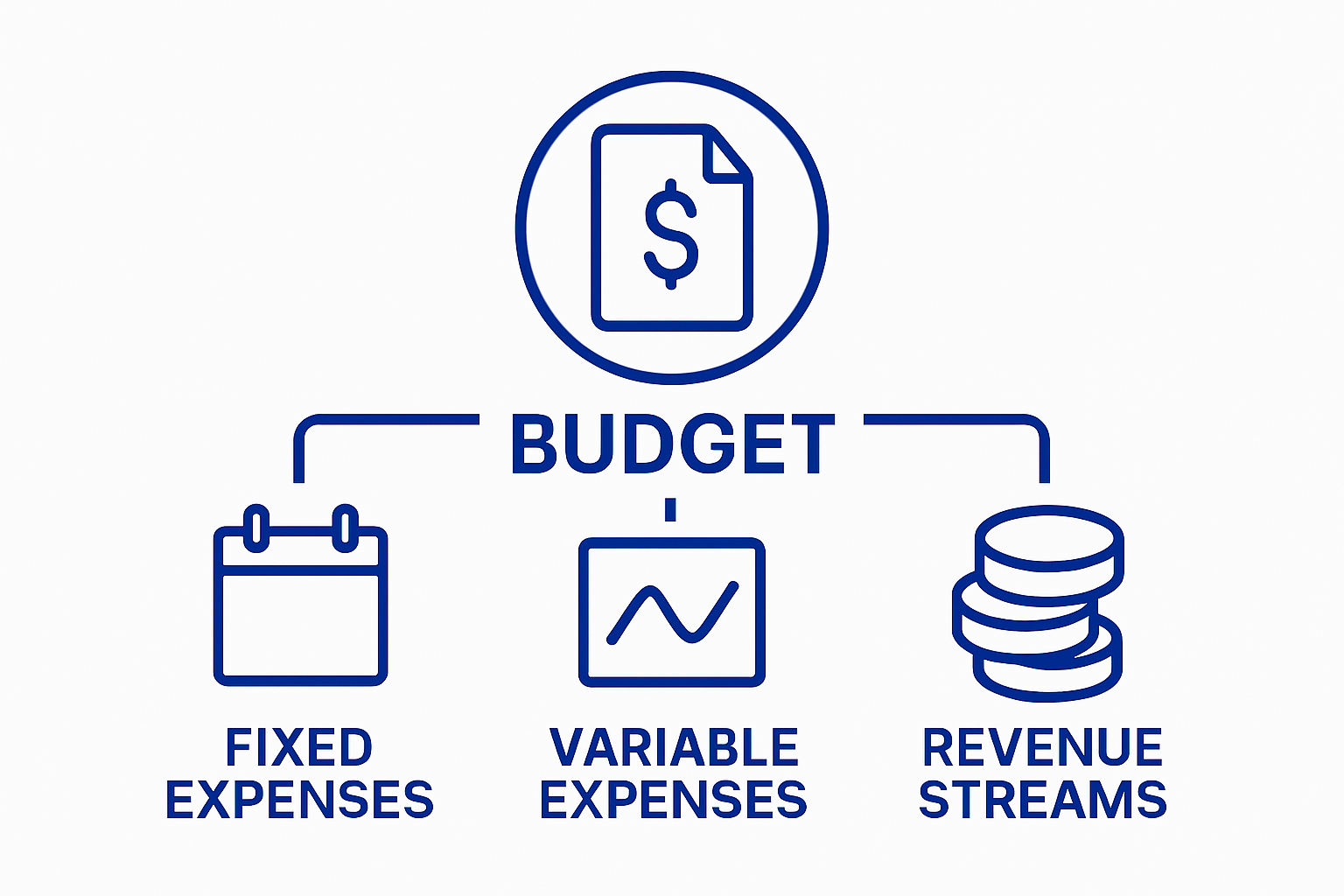
- Fixed Expenses: Consistent, predictable costs like rent and salaries
- Variable Expenses: Fluctuating costs dependent on business activity
- Revenue Streams: Multiple income sources and their potential variations
- Cash Flow Dynamics: Movement of money through the business ecosystem
- Profit Margins: Net financial returns after accounting for all expenses
Strategic Financial Interpretation
According to research from Harvard Business School, successful budgeting extends beyond numerical calculations. Key interpretative concepts include:
- Understanding the relationship between income and expenditure
- Recognizing potential financial risks and opportunities
- Developing adaptive financial strategies
- Creating realistic financial projections
- Establishing meaningful performance benchmarks
For South African small enterprises, comprehending these budgeting concepts means translating financial data into actionable intelligence. By developing a nuanced understanding of how financial components interact, businesses can craft resilient financial strategies that accommodate market complexities and support long-term organizational objectives.
Practical Applications of Budgeting for Growth
Budgeting transcends theoretical financial planning, emerging as a dynamic tool for strategic business expansion and operational optimization. For small enterprises, transforming budgetary insights into actionable growth strategies represents the critical difference between survival and sustainable development.
Strategic Investment Planning
Discover advanced financial growth strategies to leverage your budgeting insights effectively. Practical budgeting applications provide businesses with structured approaches to strategic investment and resource allocation:
- Capital Expansion: Identifying and prioritizing investment opportunities
- Talent Acquisition: Budgeting for strategic human resource development
- Technology Upgrades: Allocating resources for technological infrastructure
- Market Research: Funding initiatives to explore new business opportunities
- Risk Mitigation: Creating financial buffers for potential challenges
Performance Optimization Techniques
According to research from the University of Houston Small Business Development Center, effective budgeting requires continuous performance evaluation and adaptive strategies. Practical growth applications include:
- Regularly comparing projected versus actual financial performance
- Identifying efficiency gaps in current operational models
- Reallocating resources based on strategic performance metrics
- Developing scenario-based financial projections
- Creating flexible financial frameworks that accommodate market changes
For South African small enterprises, budgeting represents more than numerical calculations. It is a sophisticated management approach that transforms financial data into strategic intelligence, enabling businesses to navigate complex economic landscapes with precision, confidence, and a clear pathway to sustainable growth.

Turn Financial Uncertainty Into Growth With Ready Accounting
Struggling to make sense of your business budget or finding it hard to convert financial insights into real progress? If you feel overwhelmed by cash flow gaps, unpredictable expenses and the complexity of keeping up with your day-to-day numbers, it is time to break the cycle. The article above explained how budgeting is not just about math, but a strategic tool for managing risk and unlocking your potential. Now, Ready Accounting steps in to bridge the gap between your financial goals and actionable solutions.

Let our experts help you build practical, cloud-based budgeting systems that are simple and make sense for your business in South Africa. With our professional financial consulting and tailored bookkeeping support, you gain control over your income, expenses and growth opportunities. Do not let financial uncertainty hold you back. Book a consultation today and discover what true confidence in your business finances feels like. Visit Ready Accounting now and move your business from confusion to clarity.
Frequently Asked Questions
What is the purpose of budgeting for small businesses?
Budgeting helps small businesses manage financial resources effectively by estimating and tracking income and expenses, enabling strategic growth and better decision-making.
How can budgeting improve cash flow management for small enterprises?
By forecasting income and estimating expenses, budgeting allows businesses to anticipate financial challenges and manage cash flow proactively, reducing the risk of shortfalls.
What are the key components of a small business budget?
The key components typically include income projections, fixed expenses, variable expenses, and contingency funds, providing a comprehensive overview of the business’s financial landscape.
Why is it important for small businesses to review their budgets regularly?
Regular budget reviews help identify financial risks, track performance, and ensure that business strategies remain aligned with the changing economic environment, supporting long-term sustainability and growth.