
Top Tax Planning Strategies for South African Businesses 2025
Tax rules in South Africa keep getting trickier every year and missing a single update could cost your business thousands. But check this out. Small Business Corporations in South Africa now enjoy reduced tax rates for annual turnovers up to R20 million which unlocks big savings for those who qualify. It might sound like just paperwork but these incentives are the secret weapon most business owners are overlooking.
Table of Contents
- Understanding Tax Planning For South African Companies
- Smart Strategies For Saving On Business Taxes
- Cloud-Based Accounting Solutions For Easier Compliance
- Tailored Tax And Payroll Tips For Local Business Owners
Quick Summary
| Takeaway | Explanation |
|---|---|
| Proactive tax management is essential. | Understanding South Africa’s tax laws helps optimize financial performance and ensures compliance with SARS regulations. |
| Leverage tax incentives for small businesses. | Utilize available tax incentives, like reduced rates for Small Business Corporations, to minimize your tax liabilities. |
| Implement cloud accounting solutions. | Cloud-based software automates tasks, improves accuracy in financial reporting, and maintains compliance seamlessly. |
| Maximize deductions through detailed documentation. | Keeping meticulous records of all business expenses helps identify eligible deductions and reduces overall tax exposure. |
| Adopt digital tools for payroll management. | Utilizing digital solutions in payroll processing enhances compliance and efficiency while providing real-time financial insights. |
Understanding Tax Planning for South African Companies
Tax planning represents a critical strategic process for South African businesses seeking to optimize their financial performance while maintaining full legal compliance. Companies navigating the complex regulatory environment of South Africa must develop sophisticated approaches that balance fiscal responsibility with strategic financial management.
The Strategic Importance of Proactive Tax Management
Effective tax planning goes far beyond simple cost reduction. For South African businesses, it involves a comprehensive understanding of the national tax framework, SARS regulations, and potential opportunities for strategic financial optimization. Explore our comprehensive guide on year-end tax strategies to gain deeper insights into this critical business process.
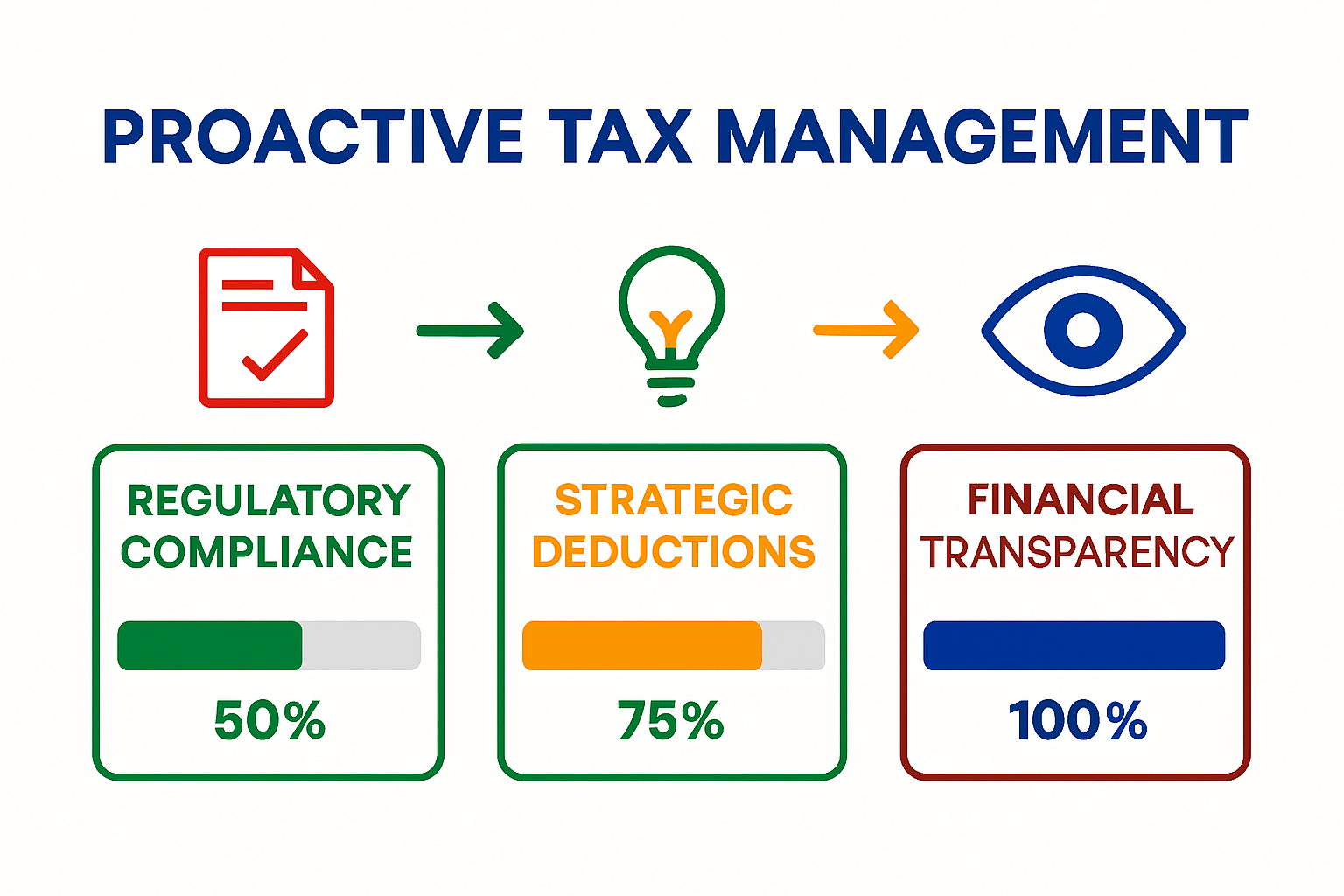
According to the OECD tax policy report, South African companies face increasingly complex tax environments that require sophisticated planning approaches. The report highlights several key considerations for businesses:
- Regulatory Compliance: Maintaining strict adherence to South African tax laws and international standards
- Strategic Deductions: Identifying legal mechanisms for reducing tax liabilities
- Financial Transparency: Ensuring accurate and comprehensive financial reporting
Navigating Corporate Tax Landscape in South Africa
The corporate tax landscape in South Africa demands meticulous attention to detail and a forward-thinking approach. Businesses must stay informed about current tax rates, potential incentives, and evolving regulatory requirements. The standard corporate tax rate of 28% means that even minor optimization strategies can result in significant financial benefits.
Key considerations for South African businesses include:
- Understanding transfer pricing regulations
- Tracking changes in tax legislation
- Implementing robust accounting systems
- Maintaining comprehensive documentation
Technology and Tax Planning
Modern tax planning increasingly relies on technological solutions that enable precise financial tracking and strategic decision making. Cloud-based accounting platforms and advanced financial management tools allow businesses to:
- Automate complex tax calculations
- Generate real-time financial reports
- Ensure accurate record keeping
- Minimize human error in financial documentation
Businesses that invest in sophisticated technological infrastructure are better positioned to navigate the intricate tax planning landscape, reducing risks and maximizing potential financial efficiencies.
Navigating tax planning requires a holistic approach that combines legal expertise, financial acumen, and strategic thinking. By developing a comprehensive understanding of the South African tax environment and leveraging both professional guidance and technological tools, companies can transform tax planning from a compliance requirement into a strategic business advantage.
Smart Strategies for Saving on Business Taxes
Smart tax planning represents a critical financial strategy for South African businesses seeking to optimize their fiscal performance and minimize tax liabilities. By implementing targeted approaches, companies can legally reduce their tax burden while maintaining full compliance with SARS regulations.
Leveraging Tax Incentives and Exemptions
South African businesses have multiple opportunities to reduce their tax obligations through strategic incentives. Discover comprehensive tax savings techniques that can significantly impact your financial bottom line.
According to the South African Revenue Service, Small Business Corporations (SBCs) can benefit from reduced tax rates. The progressive tax structure offers significant advantages for qualifying businesses:
- Graduated Tax Rates: Smaller businesses enjoy lower tax percentages
- Simplified Tax Calculations: Reduced complexity in tax reporting
- Targeted Financial Relief: Specific deductions for emerging enterprises
The Employment Tax Incentive (ETI) provides another strategic avenue for tax savings. By hiring young employees, businesses can reduce their Pay-As-You-Earn (PAYE) tax liability, creating a win-win scenario that supports job creation and financial optimization.
Below is a summary table highlighting key tax incentives and exemptions available to South African businesses. This table helps you quickly compare their benefits and main eligibility criteria.
| Incentive/Exemption | Key Benefits | Main Eligibility Criteria |
|---|---|---|
| Small Business Corporation Tax Rates | Lower, graduated tax rates up to R20 million | Registered SBC, turnover up to R20 million |
| Turnover Tax | Simplified tax system for micro businesses | Turnover under R1 million per annum |
| Employment Tax Incentive (ETI) | Reduced PAYE for hiring young employees | Employs youth (aged 18-29), compliant with SARS |
| Investment Deductions | Tax reductions for qualifying investments | Investment in qualifying assets or developments |
| Section 12J (Sunset 2021, still applied on prior investments) | Deduction for venture capital investments | Investment during period of incentive |
Strategic Deduction and Expense Management
Maximizing allowable deductions requires a proactive and comprehensive approach to financial record keeping. Businesses should focus on:
- Tracking all legitimate business expenses
- Maintaining detailed documentation
Key deductible expenses include:
- Office equipment and technology investments
- Professional development and training costs
- Business travel and transportation expenses
- Marketing and advertising expenditures
- Professional service fees
Compliance and Advanced Tax Planning Techniques
Effective tax planning extends beyond simple deductions. Businesses must develop sophisticated strategies that align with current regulations while minimizing tax exposure. This involves:
- Regular financial review and analysis
- Understanding complex tax legislation
Advanced techniques include:
- Timing of income recognition
- Strategic asset management
- Efficient corporate structure optimization
- Utilizing tax-efficient investment strategies
The VAT registration and compliance process represents another critical area where businesses can prevent costly penalties and optimize their tax position. Accurate and timely reporting ensures financial transparency and minimizes potential risks.
Successful tax planning requires a holistic approach that combines professional expertise, technological solutions, and a deep understanding of the south-african tax landscape. By implementing these strategies, businesses can transform tax management from a compliance burden into a strategic financial advantage.
Cloud-Based Accounting Solutions for Easier Compliance
Cloud-based accounting solutions have revolutionized financial management for South African businesses, offering unprecedented efficiency, accuracy, and compliance capabilities. These technological platforms provide comprehensive tools that streamline complex accounting processes while ensuring rigorous adherence to SARS regulations and financial reporting standards.
Automation and Efficiency in Financial Management
Explore the transformative potential of cloud accounting for your business operations. According to Wolters Kluwer research, automation technologies dramatically reduce manual processing time and minimize human error. Key benefits include:
- Rapid Data Processing: Automatic extraction and categorization of financial information
- Error Reduction: Systematic checks and balanced reporting mechanisms
- Time Efficiency: Significant reduction in manual administrative tasks
Automation tools can cut processing time by up to 70%, allowing businesses to redirect resources towards strategic decision making and growth initiatives.
Below is a summary table outlining key features and benefits of cloud-based accounting solutions. This helps business owners quickly see how cloud accounting supports compliance and financial management.
| Feature/Benefit | Description/Outcome |
|---|---|
| Rapid Data Processing | Extracts, categorizes, and processes data automatically |
| Error Reduction | Minimizes human error with systematic checks |
| Time Efficiency | Reduces manual tasks by up to 70% |
| Real-time Financial Tracking | Provides instant access to updated financial data |
| Secure Document Storage | Ensures safe and accessible record keeping |
| Automated Tax Calculation | Calculates taxes accurately based on current laws |
| Comprehensive Audit Trails | Tracks every financial action for rigorous compliance |
Enhanced Compliance and Reporting
Cloud-based solutions provide robust mechanisms for maintaining regulatory compliance. Microsoft’s government technology insights highlight how advanced cloud technologies support comprehensive tax administration and compliance strategies.
Key compliance features include:
- Real-time financial tracking
- Automated tax calculation
- Secure document storage
- Comprehensive audit trails
- Integrated reporting capabilities
Advanced Analytics and Strategic Insights
Modern cloud accounting platforms go beyond basic record keeping. They offer sophisticated analytical tools that transform raw financial data into actionable business intelligence. Businesses can now:
- Generate predictive financial models
- Identify potential cost-saving opportunities
- Understand complex financial patterns
- Make data-driven strategic decisions
By leveraging artificial intelligence and machine learning, these platforms provide unprecedented visibility into financial performance, enabling more informed and proactive business management.
The integration of cloud-based accounting solutions represents more than a technological upgrade. It signifies a fundamental shift in how South African businesses approach financial management, compliance, and strategic planning. Companies embracing these technologies position themselves at the forefront of financial innovation, gaining competitive advantages through enhanced efficiency, accuracy, and strategic insight.
Tailored Tax and Payroll Tips for Local Business Owners
Local business owners in South Africa face unique challenges in managing tax and payroll obligations, requiring strategic approaches that balance compliance with financial efficiency. Understanding the nuanced landscape of south-african tax regulations is crucial for sustainable business growth and operational success.
Strategic Tax Incentives for Small Businesses
Learn essential payroll management techniques that can transform your financial operations. According to the South African Revenue Service, several targeted tax incentives are available for small businesses:
- Turnover Tax: Simplified tax system for businesses with annual turnover under R1 million
- Small Business Corporation Tax Rates: Reduced rates for businesses with annual turnover up to R20 million
- Employment Tax Incentive: Financial support for hiring young job seekers
These incentives represent strategic opportunities for businesses to reduce tax burdens and support economic growth. By understanding and leveraging these programs, local business owners can optimize their financial strategies.
Compliance and Payroll Management Best Practices
Effective payroll management goes beyond simple salary processing. Insights from the OECD Economic Survey highlight the importance of aligning corporate tax strategies with broader economic objectives.
Key compliance considerations include:
- Accurate employee classification
- Precise tax withholding calculations
- Timely submission of payroll taxes
- Comprehensive record keeping
- Regular financial reconciliation
Businesses must stay informed about changing regulations and implement robust systems to ensure seamless payroll management.
Digital Transformation in Tax and Payroll Processing
The future of tax and payroll management lies in digital innovation. SARS’s Annual Performance Plan emphasizes the use of advanced technologies to simplify tax processes and enhance compliance.
Digital strategies for business owners include:
- Implementing cloud-based payroll systems
- Utilizing AI-powered tax calculation tools
- Integrating automated reporting mechanisms
- Maintaining secure digital documentation
- Leveraging real-time financial analytics
These technological approaches not only streamline administrative tasks but also provide deeper insights into financial performance. By embracing digital transformation, local business owners can reduce compliance risks and focus on core business growth.
Successful tax and payroll management requires a proactive, informed approach. South African business owners who combine strategic planning, leverage available incentives, and embrace technological solutions will be best positioned to navigate the complex financial landscape of 2025 and beyond.

Frequently Asked Questions
What are the tax incentives available for small businesses in South Africa?
Small Business Corporations (SBCs) in South Africa can benefit from reduced tax rates on turnovers up to R20 million, as well as various exemptions. Other incentives include Turnover Tax for businesses with annual turnover under R1 million and the Employment Tax Incentive for hiring young employees.
How can I optimize my business’s tax deductions in South Africa?
To maximize tax deductions, businesses should maintain detailed records of all legitimate expenses, such as office equipment, travel costs, and marketing expenditures. It is also crucial to understand and adopt strategic timing for income recognition and implement efficient asset management.
Why is cloud-based accounting important for tax compliance?
Cloud-based accounting solutions automate complex tax calculations, enhance accuracy in financial reporting, and streamline compliance with SARS regulations. They provide real-time tracking of financial data, ensuring better management of tax-related tasks and reducing human error.
How can advanced technology improve my business’s tax planning process?
Investing in advanced technology, such as cloud accounting platforms, enables businesses to automate processes, generate predictive financial models, and gain strategic insights. This transformation can enhance the accuracy of financial records and minimize risks associated with tax compliance.
Confused by Ever-Changing Tax Rules? Let Ready Accounting Optimise Your 2025 Strategy
If you have read this far, you know how easy it is to miss crucial tax updates or overlook new incentives for your business. The article made it clear that South African businesses cannot afford to treat tax planning as just a year-end chore. Mistakes or missed opportunities around Small Business Corporation tax rates, deductions, or payroll compliance put your hard-earned profits at risk. You want to proactively manage compliance, stay ahead of SARS regulations, and use cloud-based solutions without overwhelm.
Ready Accounting removes the guesswork. Our South African team stays on top of every law, manages your tax reporting, and turns complex rules into growth opportunities. We specialise in helping small and medium-sized businesses save time and money with services like tax consulting, professional accounting, and advanced payroll management solutions. Why wait until another tax deadline puts pressure on your finances? Start unlocking smarter, stress-free tax planning now. Book a consultation at Ready Accounting and let us turn the latest tax rules into an advantage for your business.