

The Ultimate VAT Compliance Protocol for South African South African Enterprises in 2025
VAT rules are shifting fast for South African small businesses. Every month, thousands of owners are hit with penalties they never saw coming and the VAT registration threshold is still locked at R1 million annual turnover for 2025. That sounds familiar, hey? Here’s what most folks overlook. The biggest change is not in the rate itself but in the brand new regulations for cloud and electronic services. Surprises like this are why it’s never been more important to know the new VAT ropes before you get caught out.
Table of Contents
- Key Vat Rules And 2025 Updates
- How To Register For Vat In South Africa
- Ensuring Vat Compliance For Cloud-Based Businesses
- Essential Vat Filing, Reporting, And Recordkeeping Tips
Quick Summary
| Takeaway | Explanation |
|---|---|
| Stay Informed on VAT Changes | Keep updated with 2025 VAT regulations to ensure compliance and optimize financial strategies for your business. |
| Maintain Accurate Records | Implement robust recordkeeping practices to track VAT inputs and outputs, adhering to the five-year retention requirement. |
| Timely VAT Submissions Essential | Submit VAT201 returns punctually to avoid penalties, understanding submission deadlines and calculating taxes accurately. |
| Utilise Cloud Accounting Solutions | Invest in cloud-based accounting tools to streamline VAT management and reduce administrative burdens on your business. |
| Understand Registration Thresholds | Remember the R1 million threshold for mandatory VAT registration, and prepare your business documentation accordingly. |
Key VAT Rules and 2025 Updates
Navigating the complex world of Value Added Tax (VAT) requires small businesses in South Africa to stay informed about the latest regulatory changes. In 2025, several critical updates will impact how businesses manage their tax obligations and financial reporting.
Understanding the Current VAT Landscape
The VAT system in South Africa continues to evolve, with SARS implementing strategic changes to improve compliance and reduce administrative burdens. Learn more about tax compliance strategies to stay ahead of these developments. According to the South African National Treasury, the planned VAT rate increase has been withdrawn, maintaining the current 15% rate. This decision provides crucial stability for small businesses planning their financial strategies.
Key developments in 2025 include significant modifications to how electronic services are defined and taxed. SARS VAT Connect Issue 19 highlights important amendments to the VAT Act, specifically targeting business-to-business transactions. These changes aim to streamline tax reporting and align with international best practices.
Critical Compliance Requirements for Small Businesses
Small businesses must pay close attention to several crucial VAT compliance requirements in 2025:
To help you keep track of essential VAT compliance requirements in 2025, here is a summary table outlining the main rules and their practical implications for small businesses:
| VAT Requirement | Details | Importance |
|---|---|---|
| Registration Threshold | R1 million annual turnover for mandatory registration | Prepares business for correct registration |
| Invoice Basis Accounting | Accurate record of all invoices for VAT inputs and outputs | Ensures compliance and audit-readiness |
| Submission Frequency | Quarterly VAT201 returns required | Avoids penalties and late filing charges |
| Digital Record-keeping | Maintain electronic records for at least five years | Critical for SARS audits and transparency |
| Cloud Accounting Solutions | Use software for automated VAT tracking and reporting | Streamlines compliance, reduces admin burden |
- Registration Threshold: The R1 million annual turnover remains the critical threshold for VAT registration. Businesses approaching this limit must prepare comprehensive documentation and systems.
- Invoice Basis Accounting: Maintain meticulous records of all invoices, ensuring accurate tracking of VAT inputs and outputs.
- Quarterly Submissions: Timely and accurate VAT201 return submissions are mandatory, with strict penalties for late or incorrect filings.
The regulatory landscape demands proactive management. Business owners must implement robust accounting systems that can handle complex VAT calculations and reporting requirements. Cloud-based accounting solutions can significantly reduce the administrative burden, providing real-time insights and ensuring compliance.
Specifically for 2025, SARS has emphasized the importance of digital record-keeping and transparent financial reporting. Small businesses should invest in accounting software that can automatically generate VAT reports, track transactions, and flag potential compliance issues before they become problematic.
Understanding these rules is not just about avoiding penalties. It’s about creating a solid financial foundation that allows your business to grow confidently. By staying informed and implementing robust systems, you can transform VAT compliance from a challenging obligation into a strategic advantage for your business.
How to Register for VAT in South Africa
Registering for Value Added Tax (VAT) is a critical step for South African small businesses looking to operate legally and maintain financial compliance. Understanding the registration process can help entrepreneurs navigate their tax obligations efficiently and avoid potential penalties.
VAT Registration Thresholds and Eligibility
In South Africa, VAT registration is mandatory for businesses with an annual turnover exceeding R1 million. Learn more about SARS registration requirements to ensure you meet all necessary criteria. According to the South African Revenue Service, businesses can also voluntarily register for VAT if their annual turnover is below the R1 million threshold.
Key eligibility requirements include:
- Sustained business operations with consistent income
- Proof of business registration with CIPC
- Valid tax identification number
- Comprehensive financial records demonstrating turnover
Step-by-Step VAT Registration Process
Registering for VAT involves several crucial steps. The official government portal recommends the following approach:
The VAT registration process in South Africa can be broken down into clear steps. Here’s a table outlining each phase and what you need for a successful application:
| Step | Description | What You Need |
|---|---|---|
| Gather Documentation | Collect business and financial documents | Registration certificates, statements, IDs |
| Online Registration | Complete VAT registration on SARS eFiling platform | Access to SARS eFiling and internet connection |
| Submit Supporting Docs | Upload all required documents and verify details | Digital copies of docs, accurate information |
| Await Confirmation | SARS reviews and processes your application | Patience as application is assessed |
- Gather Documentation: Collect all necessary business documents, including registration certificates, financial statements, and identification documents.
- Online Registration: Use SARS eFiling platform to complete the VAT registration process electronically.
- Submit Supporting Documents: Upload required documentation and verify all information for accuracy.
- Await Confirmation: SARS will review your application and provide a VAT registration number upon approval.
Small businesses should prepare digital copies of essential documents, including:
- Proof of business registration
- Bank statements
- Detailed financial records
- Identification documents of business owners
Ongoing VAT Compliance Considerations
Successful VAT registration is just the beginning of your tax compliance journey. Businesses must maintain meticulous records, submit accurate VAT201 returns quarterly, and stay updated on regulatory changes. Implementing robust accounting systems and potentially consulting with a tax professional can help manage these ongoing requirements effectively.
Remember that VAT registration is not just an administrative task but a strategic financial decision. By understanding and proactively managing your VAT obligations, you create a solid foundation for your business’s financial health and legal compliance.
Stay informed, be prepared, and approach VAT registration as an opportunity to demonstrate your business’s professionalism and commitment to financial transparency.
Ensuring VAT Compliance for Cloud-Based Businesses
Cloud-based businesses in South Africa face unique challenges when navigating VAT compliance. The digital landscape continues to evolve, presenting both opportunities and complex regulatory requirements for modern enterprises operating in the virtual marketplace.
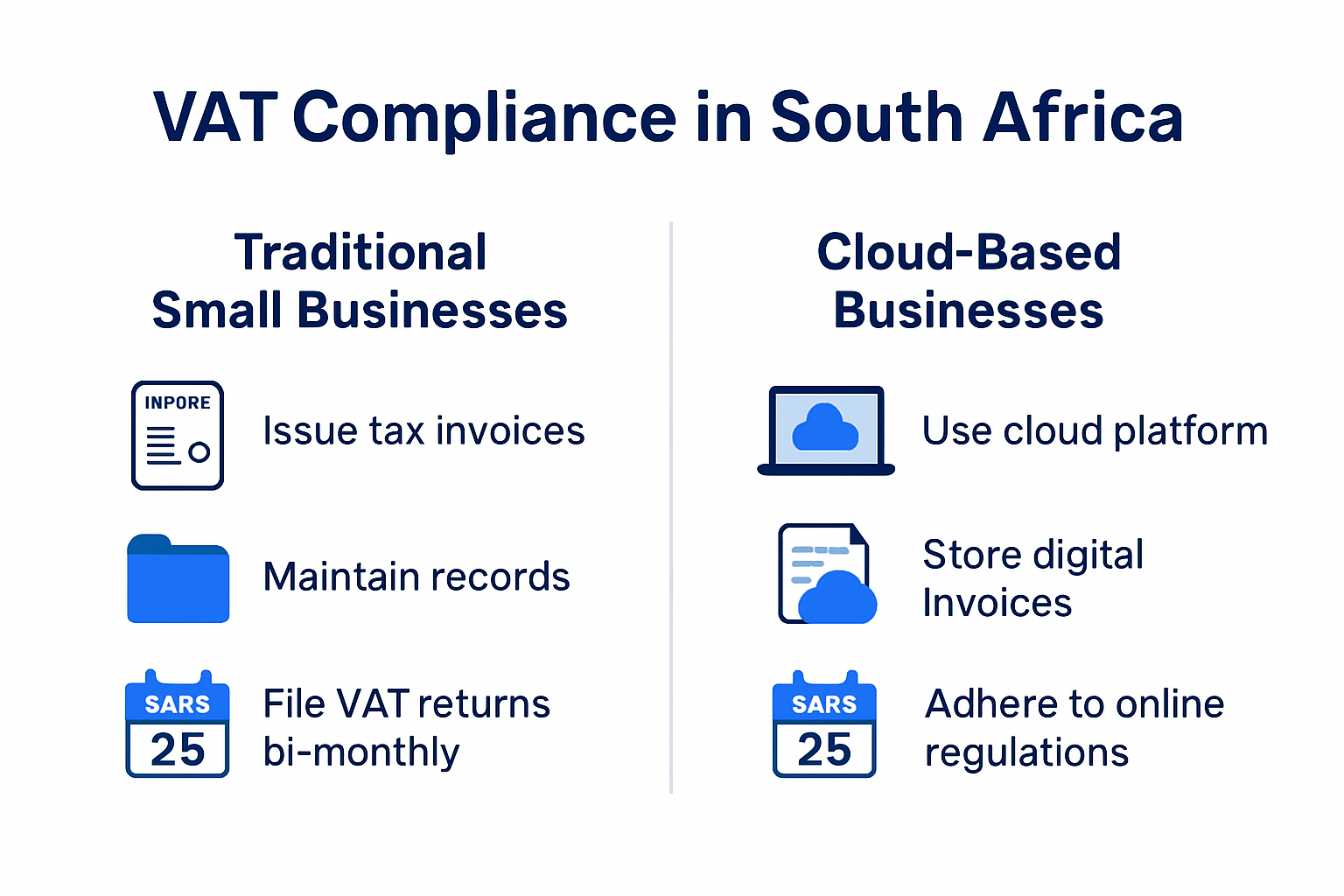
Electronic Services and VAT Regulations
The South African Revenue Service (SARS) has implemented specific guidelines for digital service providers. Explore our detailed record-keeping strategies to ensure comprehensive compliance. According to recent amendments to the VAT Act, effective 1 April 2025, foreign non-resident suppliers face new regulations for electronic services provided to VAT-registered vendors.
Key considerations for cloud-based businesses include:
- Determining the location of service delivery
- Identifying the tax residency of customers
- Tracking cross-border digital transactions
- Maintaining comprehensive digital documentation
VAT Reporting and Documentation Requirements
Cloud-based businesses must maintain meticulous records to demonstrate VAT compliance. SARS regulations mandate that businesses retain documentation for five years, including:
- Detailed tax invoices
- Electronic transaction records
- Customer billing information
- Proof of service delivery
- Financial statements
The digital nature of cloud-based businesses requires sophisticated accounting systems that can track and report VAT accurately. Automated cloud accounting solutions can help manage these complex requirements, providing real-time tracking of VAT inputs and outputs.
Navigating International VAT Complexities
For cloud-based businesses operating across borders, VAT compliance becomes increasingly intricate. Since 1 June 2014, South Africa requires foreign suppliers of electronic services to register as VAT vendors under specific conditions. This includes scenarios where:
- The service recipient is a South African resident
- Payment originates from a South African bank
- Services fall under specific electronic service categories
Intelligent businesses will invest in robust accounting technologies that can automatically:
- Calculate VAT based on customer location
- Generate compliant tax invoices
- Track cross-border transactions
- Prepare accurate VAT201 returns
The key to success lies in proactive management and continuous education. Cloud-based businesses must stay informed about evolving regulations, invest in appropriate technological solutions, and maintain transparent financial practices.
Ultimately, VAT compliance is not just about avoiding penalties but about creating a sustainable and trustworthy digital business ecosystem. By understanding and implementing these guidelines, cloud-based businesses can confidently operate in the South African market while maintaining full regulatory compliance.
Essential VAT Filing, Reporting, and Recordkeeping Tips
Successful VAT management requires a strategic approach to filing, reporting, and maintaining comprehensive financial records. South African small businesses must develop robust systems to ensure compliance and minimize potential penalties.
VAT Return Submission Strategies
Timely and accurate VAT201 return submissions are critical for maintaining good standing with SARS. Discover expert record-keeping strategies to streamline your reporting process. According to SARS guidelines, VAT vendors must submit returns and payments punctually to avoid potential penalties.
Key considerations for VAT return submissions include:
- Understanding submission deadlines
- Accurately calculating output and input tax
- Maintaining comprehensive financial documentation
- Verifying all calculations before submission
For micro businesses registered under the Sixth Schedule of the Income Tax Act, SARS offers flexibility by allowing quarterly return submissions. This can provide significant administrative relief for smaller enterprises struggling with monthly reporting requirements.
Recordkeeping Best Practices
Comprehensive recordkeeping is the backbone of VAT compliance. SARS mandates that businesses retain all financial documentation for a minimum of five years. This includes:
- Original tax invoices
- Detailed financial statements
- Bank statements
- Purchase and sales records
- Proof of all VAT-related transactions
Digital solutions have transformed recordkeeping, allowing businesses to:
- Automatically categorize expenses
- Generate instant financial reports
- Securely store digital copies of critical documents
- Track VAT inputs and outputs in real-time
Avoiding Common VAT Reporting Pitfalls
Many small businesses encounter challenges when managing VAT compliance. Common mistakes include:
- Incorrect VAT calculations
- Missing submission deadlines
- Inadequate record maintenance
- Failing to distinguish between zero-rated and standard-rated supplies
To mitigate these risks, businesses should:
- Implement cloud-based accounting systems
- Conduct regular internal financial audits
- Stay informed about current SARS regulations
- Consider professional accounting support
The voluntary VAT registration option provides additional flexibility for businesses with annual income between R50,000 and R1 million. This can be strategically beneficial for growing enterprises looking to demonstrate financial credibility.
Ultimately, successful VAT management is about more than just compliance. It’s about creating a transparent, efficient financial system that supports your business’s growth and provides clear insights into your financial performance. By developing robust reporting and recordkeeping practices, you transform a potentially stressful administrative task into a strategic business advantage.

Frequently Asked Questions
What is the VAT registration threshold for small businesses in South Africa for 2025?
The VAT registration threshold for South African small businesses in 2025 is R1 million in annual turnover. Businesses exceeding this threshold are required to register for VAT.
How often must small businesses submit VAT returns in South Africa?
Small businesses must submit VAT201 returns on a quarterly basis to comply with South African VAT regulations. Timely submission is essential to avoid penalties.
What are the recordkeeping requirements for VAT compliance in South Africa?
Businesses must maintain comprehensive records of all financial transactions related to VAT for a minimum of five years. This includes original tax invoices, financial statements, and other essential documentation.
How can cloud-based businesses ensure VAT compliance in South Africa?
Cloud-based businesses can ensure VAT compliance by implementing automated accounting systems that track VAT inputs and outputs, maintain digital documentation, and stay informed about evolving VAT regulations.
Struggling With the New VAT Rules? Here’s How Ready Accounting Makes Compliance Simple
Trying to keep up with changing VAT regulations and digital record-keeping can leave any business owner feeling overwhelmed. This article has shown that missing a single submission or failing to update your systems can mean costly penalties and extra admin work for your team. Many South African small businesses are under pressure to maintain accurate documentation, submit VAT201 returns on time and unravel the complexities of cloud-based compliance. These are big headaches but you do not have to face them alone.
Let the experts at Ready Accounting lighten your load. We specialise in helping South African entrepreneurs like you move onto smarter cloud accounting systems and implement VAT processes that are fast, accurate and stress-free. Our team can also take care of your bookkeeping clean-up, regular submissions and tax consulting so you avoid errors and stay compliant year-round. Do not wait for another VAT deadline to sneak up on you. Book a free consultation today and let us show you a better way forward.