

Record Keeping Requirements for SA Businesses in 2025
Keeping business records in South Africa might sound like a boring admin chore and yet it could decide the future of your company. You might think five years of receipts is enough to keep SARS happy but here is the shocker. Certain records must be kept for up to 15 years by close corporations and destroying them too soon could land you with massive penalties. The longest retention requirements hide in plain sight and catching them can save your business from big trouble.
Table of Contents
- Key Record Keeping Requirements In South Africa
- How Long To Keep Business Records Legally
- Cloud-Based Solutions For Efficient Record Keeping
- Tips For Simplifying Bookkeeping And Reporting
Quick Summary
| Takeaway | Explanation |
|---|---|
| Maintain records for five to seven years | South African businesses must retain financial records for at least five years, extending to seven years for certain documents, to ensure compliance with tax and auditing regulations. |
| Use cloud solutions for efficiency | Cloud-based record keeping enhances efficiency with benefits like remote access, automatic backups, and compliance tracking, making document management easier for businesses. |
| Implement systematic document organization | Establishing a clear organizational system for financial documents simplifies bookkeeping, aids transparency, and ensures regulatory compliance, supporting better business practices. |
| Regular audits for compliance | Conducting periodic reviews of record keeping practices helps identify inefficiencies and ensures ongoing compliance with evolving legal requirements in South Africa. |
| Secure digital storage is essential | Protecting records with robust security measures and ensuring data integrity is crucial for safeguarding sensitive information within cloud-based solutions. |
Key Record Keeping Requirements in South Africa
Navigating the complex world of business record keeping in South Africa requires precision and understanding of specific legal obligations. For businesses operating in this dynamic economic environment, maintaining accurate and comprehensive records is not just a recommended practice it is a mandatory requirement with significant legal implications.
Legal Framework for Business Record Keeping
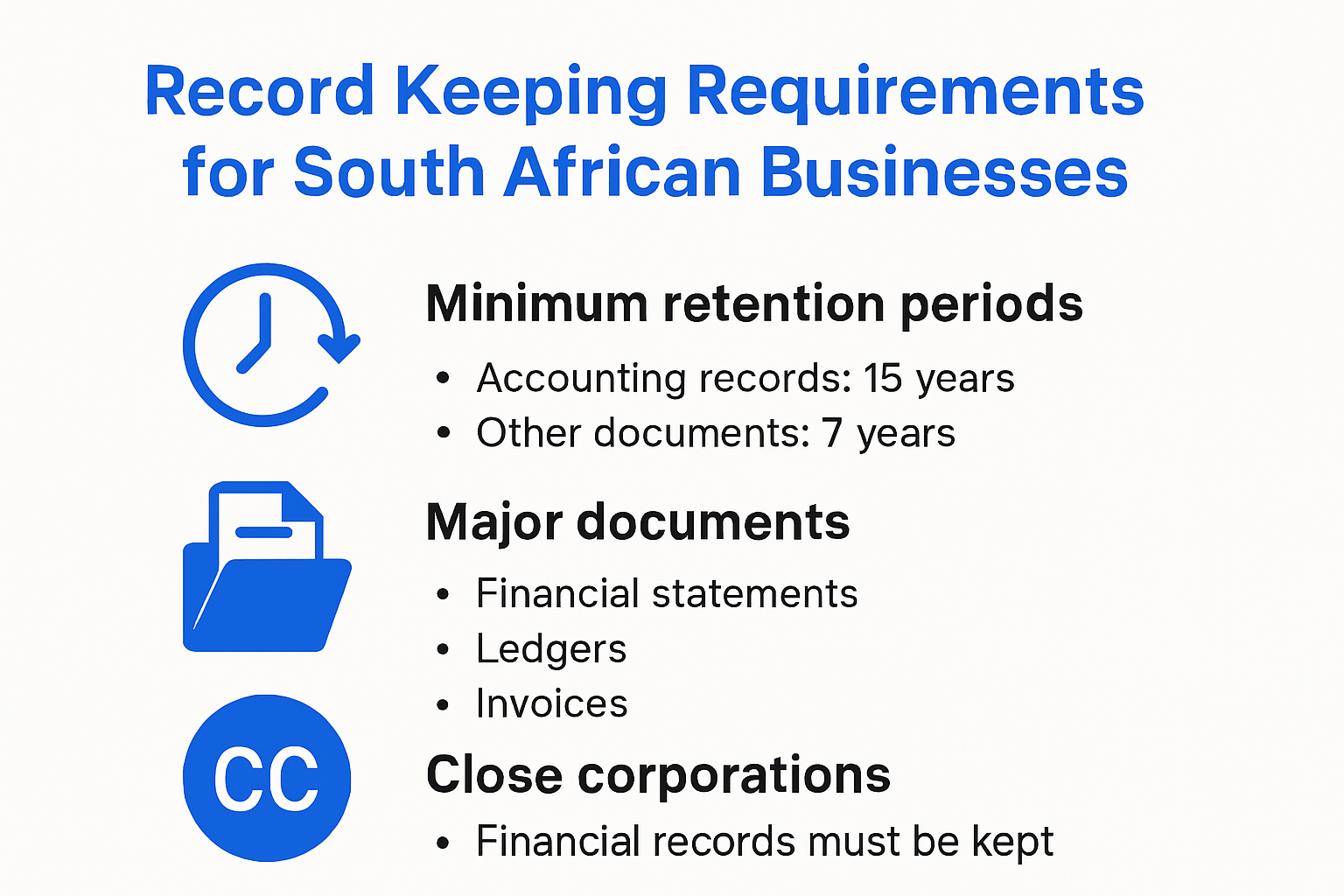
The South African business landscape is governed by stringent record keeping regulations that protect both businesses and tax authorities. According to SARS Tax Administration Act, businesses are legally required to maintain financial records for a minimum of five years. This requirement ensures transparency, enables accurate tax reporting, and provides a clear audit trail for potential investigations.
The Companies Act adds another layer of complexity to record keeping requirements. Detailed regulations mandate that companies must maintain accounting records in an official language of South Africa, providing sufficient information to prepare financial statements and facilitate comprehensive audits.
Essential Documents and Record Types
Businesses must preserve a wide range of documents to remain compliant. These typically include:
- Financial Statements: Comprehensive annual financial reports detailing income, expenses, assets, and liabilities
- Tax Returns: Detailed VAT returns, income tax submissions, and payroll tax documentation
- Invoices and Receipts: Original copies of all financial transactions, both incoming and outgoing
- Bank Statements: Monthly records of all financial transactions
- Payroll Records: Employee payment histories, tax contributions, and related documentation
The importance of maintaining these records cannot be overstated. Failure to comply with record keeping requirements can result in substantial penalties, potential legal action, and complications during tax assessments. SARS has increasingly sophisticated systems for detecting inconsistencies, making meticulous record management a critical business strategy.
Modern businesses are increasingly turning to cloud-based accounting solutions to streamline their record keeping processes. These digital platforms offer secure storage, easy retrieval, and automated compliance tracking, helping businesses stay organized and prepared for potential audits.
Businesses should also be aware that record keeping requirements extend beyond traditional financial documents. Contracts, correspondence, meeting minutes, and other operational records may also need to be preserved depending on specific industry regulations and the nature of the business.
While the task might seem daunting, implementing a systematic approach to record management can transform a potential administrative burden into a strategic business advantage. Regularly reviewing and updating record keeping processes ensures ongoing compliance and provides valuable insights into business performance.
Professional accounting services can provide invaluable support in navigating these complex requirements, offering expertise in document management, digital archiving, and compliance strategies tailored to your specific business needs.
To help clarify the types of essential documents and their typical use or purpose, below is a summary table:
| Document Type | Purpose/Contents |
|---|---|
| Financial Statements | Income, expenses, assets, and liabilities reports |
| Tax Returns | VAT submissions, income tax filings, payroll tax documentation |
| Invoices and Receipts | Original records of all incoming and outgoing transactions |
| Bank Statements | Monthly overview of all company financial transactions |
| Payroll Records | Employee payment details, tax contributions, and payroll documentation |
| Contracts/Agreements | Legal and financial terms for business deals or service arrangements |
| Meeting Minutes | Records of decisions and discussions from business meetings |
How Long to Keep Business Records Legally
Understanding the legal requirements for record retention is crucial for South African businesses seeking to maintain compliance and protect themselves from potential legal complications. The duration for keeping business records varies depending on the type of document and the specific regulatory framework governing your industry.
Statutory Record Retention Periods
The South African legal landscape provides clear guidelines on record retention. According to SARS Tax Administration Act, businesses must retain financial records for a minimum of five years from the date of submission of a tax return. This mandatory period ensures that companies can provide comprehensive documentation in case of tax audits or investigations.
Moreover, the Companies Act, 2008 extends this requirement further. Companies are obligated to keep records, including documents, accounts, books, and other critical information, for a minimum of seven years. This extended period provides additional protection and allows for thorough financial transparency.
Specific Record Types and Their Retention Periods
Different types of business records have varying retention requirements:
- Financial Records: Five to seven years (tax returns, financial statements, bank statements)
- Payroll Documents: Five years after an employee leaves the company
- Contracts and Legal Agreements: Typically seven years after the contract expires
- Employee Records: Five years after employment termination
- VAT Records: Five years from the date of submission
Close corporations face even more stringent requirements. The Close Corporations Act mandates that accounting records and supporting schedules must be retained for 15 years. Founding statements and minute books must be kept indefinitely, ensuring a comprehensive historical record of the business’s operations.
Digital record keeping has transformed how businesses manage documentation. Cloud storage solutions now offer secure, long-term preservation of critical business documents. These platforms provide advanced features like automatic archiving, secure backup, and easy retrieval, making compliance more manageable for businesses of all sizes.
It is critical to note that merely storing documents is not enough. Records must be stored in a manner that ensures their integrity, accessibility, and confidentiality. This means protecting digital files with robust security measures and maintaining physical documents in secure, controlled environments.
Businesses should develop a comprehensive record management strategy that goes beyond mere compliance. Regular audits of record retention practices, clear protocols for document storage and destruction, and training for employees on record keeping best practices can help mitigate risks and ensure smooth operations.
While the legal requirements might seem complex, they serve an essential purpose. Proper record keeping protects businesses from potential tax disputes, provides transparency, supports financial planning, and creates a clear historical trail of business activities. Professional accounting services can provide invaluable guidance in navigating these intricate record retention requirements, ensuring your business remains fully compliant and protected.
The table below summarises statutory retention periods for key business record types in South Africa:
| Record Type | Minimum Retention Period | Applicable Law/Notes |
|---|---|---|
| Financial Records | 5 – 7 years | SARS Tax Administration Act, Companies Act |
| Payroll Documents | 5 years after employee leaves | SARS, Labour Relations Act |
| Contracts & Legal Agreements | 7 years after contract expiry | Companies Act |
| Employee Records | 5 years after employment termination | Basic Conditions of Employment Act |
| VAT Records | 5 years from date of VAT submission | SARS |
| CC Accounting Records & Schedules | 15 years | Close Corporations Act |
| CC Founding Statements/Minute Books | Indefinitely | Close Corporations Act |
Cloud-Based Solutions for Efficient Record Keeping
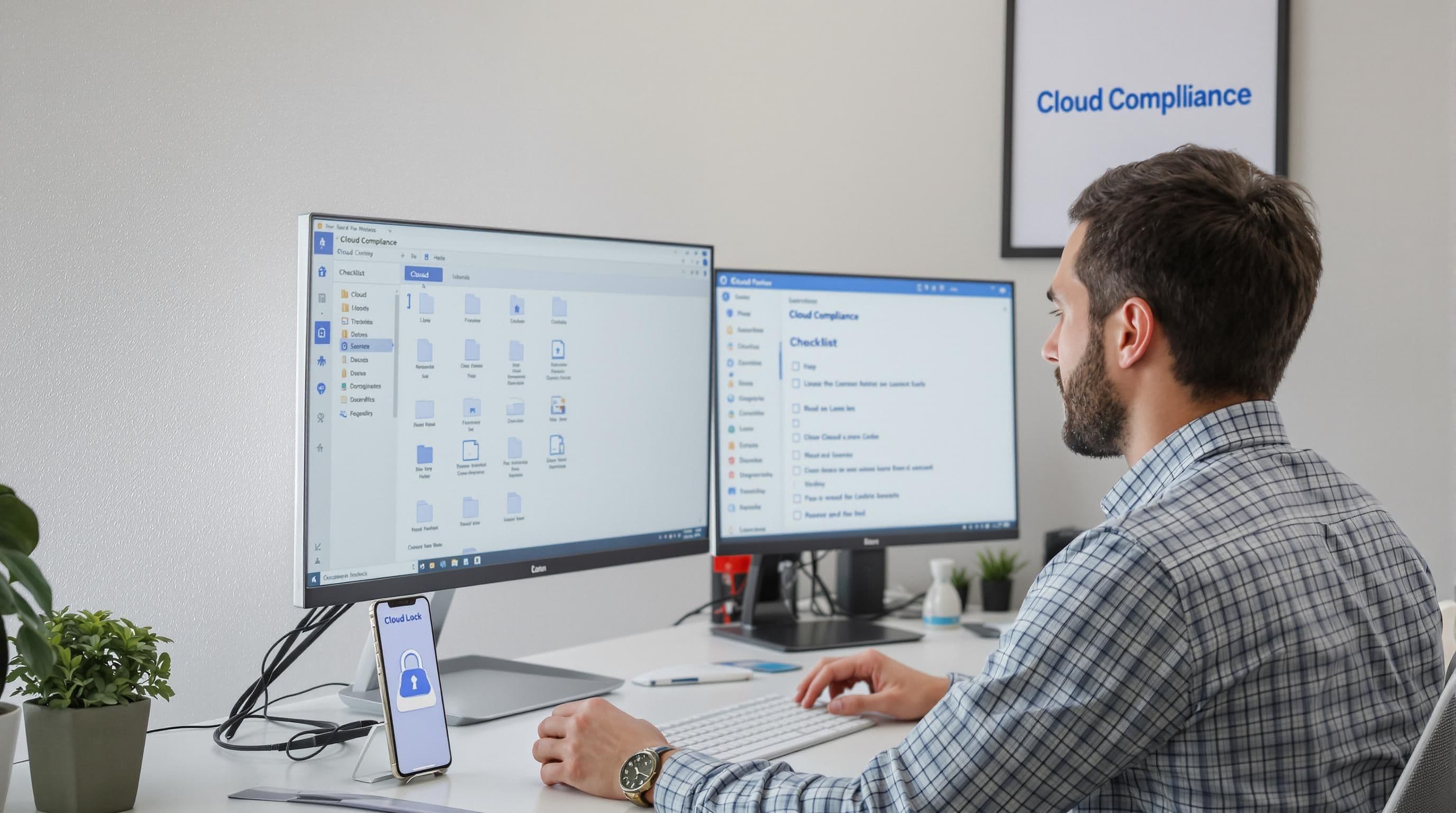
In the rapidly evolving digital landscape of South African business, cloud-based solutions have emerged as a transformative approach to record keeping. These innovative technologies offer businesses unprecedented efficiency, security, and accessibility in managing critical financial documentation and compliance requirements.
Benefits of Cloud-Based Record Management
Cloud storage solutions provide remarkable advantages over traditional paper-based and local computer storage systems. According to IRS guidelines on electronic record management, electronic records must be managed with robust protection against unauthorized access, alteration, or deletion. Modern cloud platforms excel in meeting these stringent security requirements.
Key benefits include:
- Automatic Backup: Continuous data protection preventing potential loss of critical business records
- Remote Accessibility: Enabling secure document retrieval from anywhere with internet connectivity
- Scalable Storage: Flexible solutions that grow alongside your business needs
- Advanced Security Protocols: Encryption and multi-factor authentication protecting sensitive financial information
Compliance and Security Considerations
Businesses must carefully evaluate cloud solutions to ensure they meet South African regulatory standards. The 2025 GAO report on cloud computing emphasizes the critical importance of establishing clear incident response procedures and continuous monitoring mechanisms.
When selecting a cloud-based record keeping system, businesses should prioritize platforms that offer:
- Compliance with SARS and Companies Act record retention requirements
- Robust data encryption
- Regular security updates
- Comprehensive audit trail capabilities
- Seamless integration with existing accounting systems
While cloud solutions offer remarkable advantages, they are not a one-size-fits-all solution. Businesses must conduct thorough assessments of their specific record keeping needs, evaluating factors such as industry regulations, data volume, and accessibility requirements.
Implementing a cloud-based record management strategy requires careful planning and employee training. Staff must understand proper digital document handling, security protocols, and the importance of maintaining accurate and accessible records.
Modern cloud platforms go beyond simple storage. Advanced features like automated categorization, intelligent search functionality, and integration with accounting software transform record keeping from an administrative burden into a strategic business tool. These technologies enable businesses to extract valuable insights from their financial documentation, supporting more informed decision-making.
Cost-effectiveness is another significant advantage. Cloud solutions eliminate the need for expensive on-site server infrastructure, reduce physical storage requirements, and minimize the labor costs associated with manual record management. Small and medium enterprises can now access enterprise-level record keeping technologies without substantial upfront investments.
As digital transformation accelerates, cloud-based record keeping is no longer optional but essential. Businesses that embrace these technologies position themselves for greater operational efficiency, regulatory compliance, and strategic agility in an increasingly complex business environment.
Professional accounting services can provide invaluable guidance in selecting, implementing, and optimizing cloud-based record management systems tailored to your specific business requirements.
Tips for Simplifying Bookkeeping and Reporting
Bookkeeping and financial reporting can often feel overwhelming for South African businesses, particularly small and medium enterprises navigating complex regulatory landscapes. Implementing strategic approaches can transform these necessary administrative tasks from burdensome challenges into streamlined, efficient processes that support business growth and compliance.
Strategic Financial Organization
Effective bookkeeping begins with establishing a systematic approach to financial documentation. According to U.S. Small Business Administration guidelines, businesses should prioritize separating personal and business finances as a fundamental first step. This practice not only simplifies record keeping but also provides clear financial transparency.
Key organizational strategies include:
- Digital Categorization: Creating clear digital folders for different expense types
- Consistent Documentation: Maintaining uniform naming conventions for financial documents
- Regular Reconciliation: Matching bank statements with internal financial records monthly
- Automated Transaction Tracking: Utilizing accounting software that automatically categorizes expenses
Leveraging Technology for Efficiency
Modern technological solutions can dramatically simplify bookkeeping processes. IRS recordkeeping recommendations emphasize the importance of maintaining accurate digital records. Cloud-based accounting platforms offer sophisticated tools that automate many traditional manual bookkeeping tasks.
Recommended technological approaches include:
- Implementing robust accounting software with automated reporting capabilities
- Using bank feed integrations that automatically import and categorize transactions
- Establishing digital receipt capture systems
- Creating automated recurring invoice and expense tracking
Choosing the right technological solution requires careful evaluation of your specific business needs. Consider factors such as user-friendliness, integration capabilities with existing systems, scalability, and compliance with South African financial regulations.
Professional bookkeepers recommend developing a consistent routine for financial management. This might involve setting aside specific times weekly or monthly for comprehensive financial review, ensuring no transactions are overlooked and maintaining up-to-date financial records.
Training remains a critical component of efficient bookkeeping. Investing time in understanding your chosen accounting systems, learning keyboard shortcuts, and developing standardized processes can save significant time and reduce potential errors.
Small businesses should also consider periodic professional reviews of their bookkeeping systems. An external perspective can identify inefficiencies, suggest improvements, and ensure ongoing compliance with evolving regulatory requirements.
Ultimately, simplifying bookkeeping is about creating a system that works seamlessly with your business operations. By combining technological solutions, systematic approaches, and continuous learning, businesses can transform financial record keeping from a complex challenge into a strategic advantage.
Professional accounting services can provide tailored guidance in developing and implementing an efficient, compliant bookkeeping strategy specific to your business’s unique requirements.
Frequently Asked Questions
How long must businesses in South Africa keep financial records?
Businesses in South Africa are required to keep financial records for a minimum of five years, with some documents needing to be retained for up to seven years to comply with SARS regulations.
What are the main documents that need to be kept for record-keeping?
Essential documents include financial statements, tax returns, invoices, receipts, bank statements, and payroll records, among others. Each type has specific retention requirements.
What penalties can businesses face for not complying with record keeping requirements?
Failure to comply with record keeping requirements in South Africa can lead to substantial penalties, legal action, and complications during tax assessments, which may greatly affect business operations.
Are cloud-based solutions effective for managing business records in South Africa?
Yes, cloud-based solutions provide efficient record management, offering benefits like automatic backups, remote access, and enhanced security, ensuring compliance with South African record-keeping regulations.
Make Stress-Free Compliance Your New Standard in 2025
Worried that your business records might not meet the tough new requirements highlighted in this article? You are not alone. Navigating South Africa’s strict retention rules, from the five-year SARS minimum to the daunting 15-year mark for close corporations, can easily overwhelm even the most organised business owner. Missing just one document or mishandling your cloud storage security could invite major penalties and endless admin headaches. But there is a smarter way forward for business owners who want peace of mind and more time to grow.
Ready Accounting specialises in cloud-based record keeping and tailored compliance support for small to medium businesses across South Africa. We combine the latest automation technology with hands-on local expertise to streamline everything from digital archiving to SARS-compliant payroll management. Every bookkeeping cleanup, every submission, and every strategic consultation is designed to make staying compliant simple and reliable. Why leave your future to chance or risk costly slip-ups? Take control of your records with a trusted partner. Book your next step now at Ready Accounting or explore how our complete financial statement preparation can protect your business year-round. Start your journey to record-keeping confidence and let us help your company thrive.