

Importance of business ethics for lasting success
Executive Summary
- Business ethics are moral principles that guide how companies operate and interact with stakeholders. Companies recognized for ethical conduct outperform market benchmarks and recover faster from downturns, supporting long-term growth. Building a strong ethical culture relies on systems like trusted reporting channels, clear leadership expectations, and regular training.
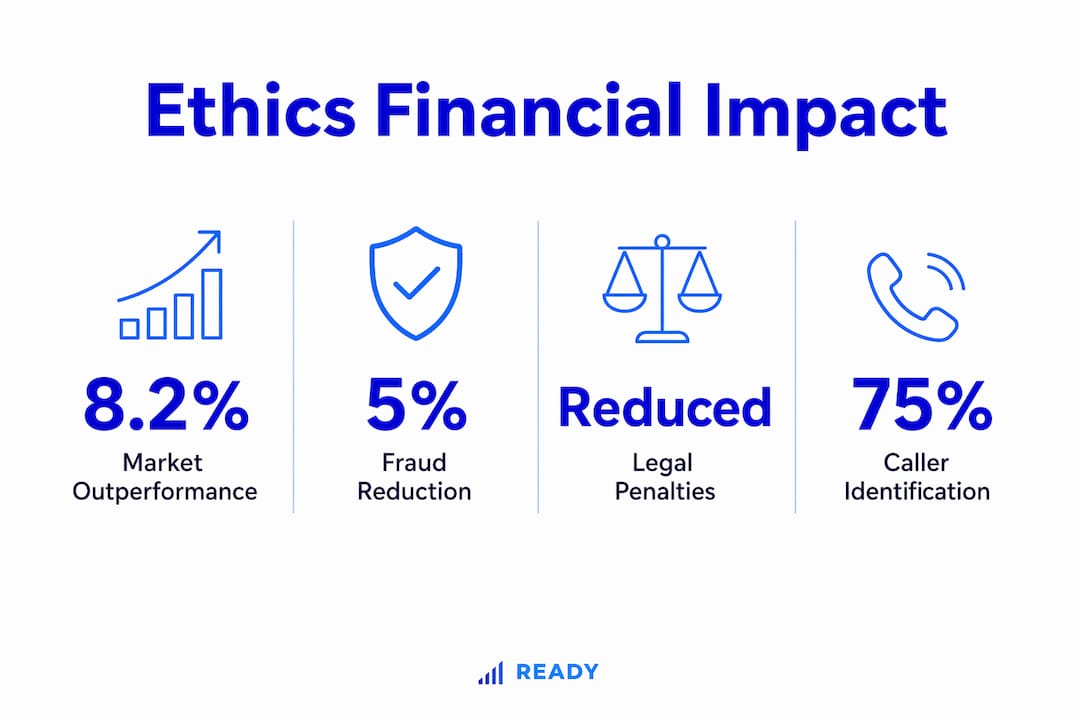
Business ethics are the moral principles that govern how a company conducts its operations and engages with every stakeholder it touches. For South African entrepreneurs and business professionals, understanding the importance of business ethics is not a philosophical exercise. It is a direct driver of profitability, SARS compliance, and long-term organizational resilience. The Ethisphere 2026 Ethics Premium analysis confirms this: companies recognized for ethical conduct outperformed market benchmarks by 8.2 percentage points. Ethics, properly embedded, is a competitive advantage.
Why does the importance of business ethics translate to financial results?
Ethical companies do not just feel better to work with. They perform measurably better in financial markets. The Ethisphere 2026 analysis shows that ethical companies experienced 7.1% smaller drawdowns and recovered from market volatility 10.1% faster than their peers. That means when markets turn, ethical businesses lose less and bounce back quicker.
Fraud is a direct financial drain that ethics programs address head-on. Fraud costs companies about 5% of revenue annually, a figure that compounds painfully for scaling SMEs. Strong ethical cultures reduce this loss through earlier detection and a workforce that feels safe reporting concerns.
Legal penalties are another avoidable cost. Companies with working compliance programs face fewer fines and reduced penalties under regulatory frameworks, including those enforced by bodies equivalent to South Africa’s SARS and the Companies and Intellectual Property Commission (CIPC). Every rand saved on penalties is a rand that stays in your growth budget.
Pro Tip: Treat your ethics program as a financial control, not a values statement. Assign it a budget line, measure its outcomes quarterly, and report on it the same way you report on VAT compliance.
| Financial benefit | What it means in practice |
|---|---|
| 8.2% market outperformance | Ethical companies grow faster than peers over time |
| 7.1% smaller market drawdown | Less value lost when conditions deteriorate |
| 10.1% faster recovery | Ethical firms regain ground more quickly after downturns |
| 5% fraud cost reduction | Early detection through ethical culture cuts direct revenue loss |
| Fewer regulatory penalties | Compliance programs reduce fines from bodies like SARS and CIPC |
What are the core principles and frameworks behind business ethics?
Business ethics, formally called corporate ethics or organizational ethics in governance literature, rests on four pillars: accountability, transparency, fairness, and responsibility. Each pillar has a practical job. Accountability means decision-makers own the outcomes of their choices. Transparency means financial reporting and business conduct are open to scrutiny, a standard enforced in South Africa through the King IV Report on Corporate Governance.

Corporate governance structures are the mechanism that turns ethical principles into daily behavior. Boards, audit committees, and executive leadership set the tone. When leadership models ethical conduct, the rest of the organization follows. When leadership cuts corners, the culture follows that too.
Ethisphere’s Ethics Quotient assessment uses over 240 questions covering policies, culture, and risk to evaluate how deeply ethics is embedded in an organization. That depth of assessment reflects how seriously leading companies treat ethics as an operational discipline, not a checkbox.
Key principles that underpin a sound ethical framework include:
- Accountability: Leaders and teams own the consequences of their decisions without deflecting blame.
- Transparency: Financial statements, VAT records, and business dealings are accurate and accessible to relevant stakeholders.
- Fairness: Employees, suppliers, and customers receive consistent and equitable treatment.
- Responsibility: The business considers its impact on the community, environment, and economy, not just its own bottom line.
- Integrity: Commitments made to clients, regulators like SARS, and partners are honored without exception.
Ethical leadership requires practical frameworks that balance competing stakeholder demands and make ethics integral to strategic decisions. That is the role of ethics in business governance: not to moralize, but to give leaders a structured way to navigate real dilemmas.
How can businesses build an ethical culture that supports decision-making?
Culture is built through systems, not speeches. The most important insight from studying 50 corporate leaders is that leaders must shift focus from making people more moral to changing systems so that making ethical decisions becomes easier. That reframe changes everything about how you design your organization.
Here is a practical sequence for building that culture:
- Establish a trusted reporting channel. Third-party speak-up lines raise identified caller rates to around 75%, compared to a 50% industry average. Higher identification rates signal that employees trust the system and do not fear retaliation.
- Set clear expectations from the top. Leadership must articulate the company’s purpose beyond profit. Ethics gives leaders a framework to navigate competing stakeholder pressures, including those from investors, employees, regulators, and communities.
- Measure speak-up activity. Healthy organizations maintain approximately 3.6 reports per 100 employees. A low report rate is not a sign of a clean culture. It often signals that employees do not trust the system enough to use it.
- Tie incentives to ethical behavior. Reward employees who flag concerns, not just those who hit revenue targets. Misaligned incentives are the single fastest way to erode an ethical culture you spent years building.
- Run regular business ethics training programs. Training must go beyond annual compliance tick-boxes. Scenario-based training, where employees work through real dilemmas, builds the decision-making muscle that matters when pressure is high.
Pro Tip: When designing your speak-up system, use an independent third-party provider. Internal hotlines consistently underperform on trust metrics because employees worry about anonymity.
Ethical practices in the workplace do not emerge from good intentions alone. They emerge from systems that make the right choice the easy choice. For South African SMEs navigating SARS audits, CIPC filings, and investor scrutiny, that system-level thinking is what separates businesses that survive scrutiny from those that do not.
What are the broader benefits of ethics beyond compliance and profitability?
Ethics builds the kind of reputation that no marketing budget can buy. Stakeholders, including clients, investors, and regulators, extend more trust to businesses with a visible ethical track record. That trust translates into faster deal cycles, better credit terms, and more forgiving regulators when honest mistakes occur.
The benefits of business ethics extend directly into talent retention. Younger workers prioritize company values nearly as much as pay when choosing employers. A business that treats ethics seriously attracts people who want to build something lasting, not just collect a salary.
Sustainable business practices are inseparable from ethical conduct. Ethical behavior correlates with long-term economic and community benefits, which matters in the South African context where businesses operate within communities that have long memories. A company that exploits its suppliers or evades VAT may gain short-term margin. It loses the social license to operate that every growing business eventually needs.
The broader benefits include:
- Brand trust: Clients and partners choose businesses they believe will deal with them honestly, especially in high-stakes financial relationships.
- Employee morale: Teams that believe in their company’s values work harder and stay longer, reducing costly turnover.
- Talent attraction: Ethical employers attract candidates who value purpose, giving them access to a higher-quality talent pool.
- Sustainable growth: Ethical practices support long-term business growth by building relationships that compound over time.
- Regulatory goodwill: Businesses with clean compliance records receive more cooperative treatment from SARS, SAICA-affiliated auditors, and other oversight bodies.
For South African entrepreneurs, the connection between ethical accounting practices and sustainable business outcomes is direct. Accurate financial reporting, honest VAT submissions, and transparent Annual Financial Statements are not just legal requirements. They are the foundation of a business that lenders, investors, and partners want to back.
Key takeaways
Ethical companies outperform peers financially, recover faster from downturns, and build the trust that sustains long-term growth across every stakeholder relationship.
| Point | Details |
|---|---|
| Ethics drives financial outperformance | Ethical companies beat market benchmarks by 8.2 percentage points, per Ethisphere 2026. |
| Fraud prevention is a direct ROI | Fraud costs 5% of revenue annually; ethical cultures detect it earlier and reduce losses. |
| Systems matter more than intentions | Changing organizational systems makes ethical decisions easier than relying on individual morality. |
| Speak-up culture signals health | Around 3.6 reports per 100 employees indicates an engaged, trusting workforce. |
| Ethics supports talent and sustainability | Younger workers prioritize values alongside pay, making ethics a talent and retention tool. |
Ethics is a leadership discipline, not a moral lecture
I have worked with enough business leaders to know that ethics fatigue is real. Founders hear “do the right thing” so often that it starts to sound like noise. What actually changes behavior is reframing ethics as a practical leadership discipline, not a values poster on the wall.
The leaders I respect most do not talk about ethics in abstract terms. They design systems. They ask: “What does our incentive structure reward?” and “Would our employees feel safe raising a concern right now?” Those are operational questions, not philosophical ones. The answer to each one tells you more about your ethical culture than any mission statement.
South African business owners face a specific version of this challenge. Operating in an environment with complex SARS requirements, BBBEE considerations, and community accountability means the stakeholder pressures are real and layered. Ethics is the framework that helps you navigate those pressures without losing your integrity or your business. The Institute of Business Ethics research on 50 corporate leaders confirms this: ethics aids in solving dilemmas that standard financial analysis simply cannot resolve.
My honest view is that most businesses underinvest in ethics infrastructure and overinvest in ethics rhetoric. The fix is not a new values statement. It is a trusted reporting channel, aligned incentives, and leadership that models the behavior it expects. Build that, and the culture follows. For entrepreneurs who want to connect ethical financial planning with long-term wealth creation, the same principle applies: structure the system first, and the outcomes take care of themselves.
— Johan
How Readyaccounting supports ethical, compliant business growth
Readyaccounting works with scaling South African SMEs and VC-backed startups that take financial integrity seriously. Ethical business conduct starts with accurate, transparent financial data, and that is exactly what Readyaccounting’s cloud infrastructure and real-time reporting deliver. When your books are clean and your SARS submissions are accurate, you remove the conditions that create ethical risk in the first place. Readyaccounting’s accounting automation guide shows how replacing manual processes with automated controls reduces human error and the temptation to cut corners. For SMEs ready to build a finance function that supports ethical decision-making at every level, Readyaccounting is the place to start.
FAQ
What is the definition of business ethics?
Business ethics are the moral principles and standards that guide how a company conducts its operations, treats its stakeholders, and makes decisions. They cover everything from financial reporting accuracy to fair treatment of employees and suppliers.
Why do business ethics matter for profitability?
Ethical companies outperformed market benchmarks by 8.2 percentage points in the Ethisphere 2026 Ethics Premium analysis. They also experience smaller market drawdowns and recover faster, making ethics a direct driver of financial resilience.
How does a speak-up culture improve ethical practices in the workplace?
Trusted reporting channels raise identified caller rates to around 75%, compared to a 50% industry average. Higher identification rates signal employee trust and enable earlier detection of fraud or misconduct.
What role does corporate governance play in business ethics?
Corporate governance structures, including boards, audit committees, and compliance programs, translate ethical principles into daily business behavior. In South Africa, frameworks like the King IV Report on Corporate Governance set the standard for ethical business conduct.
How do ethics influence business decisions under regulatory pressure?
Ethics gives leaders a structured framework to navigate competing stakeholder demands, including pressure from SARS, investors, and communities. Companies with working compliance programs face fewer fines and make better decisions when standard financial analysis reaches its limits.
Recommended
- Boost financial integrity with ethical accounting practices | Ready Accounting
- Understanding Sustainable Business Practices for Success - Ready Accounting
- Master risk management in accounting for SME success | Ready Accounting
- Corporate social responsibility: a 2026 guide for leaders | Ready Accounting