

Execution Framework: Prepare for Tax Season: Critical Protocols for 2025
Getting your tax documents sorted can feel like searching for your socks in a messy laundry basket. Most people only discover the chaos once SARS deadlines loom and panic sets in. Yet collecting your documents early is a game changer because SARS actually requires you to keep financial records for at least five years. That small habit can save you stress and money and help you avoid those nasty last-minute surprises.
Table of Contents
- Step 1: Gather Your Financial Records And Documents
- Step 2: Organize Your Income And Expense Statements
- Step 3: Review Relevant Tax Regulations And Changes
- Step 4: Choose The Right Cloud-Based Accounting Solution
- Step 5: Prepare And File Your Tax Returns
- Step 6: Verify Your Submission And Maintain Records
Quick Summary
| Key Point | Explanation |
|---|---|
| 1. Gather all financial documents | Collect necessary records like IRP5 certificates, bank statements, and receipts to ensure a smooth tax filing process. |
| 2. Organize income and expenses carefully | Categorize income and expenses systematically to maximize deductions and ease the preparation of your tax return. |
| 3. Stay updated on tax regulations | Regularly review SARS guidelines for changes that could affect your tax strategy and filing requirements. |
| 4. Choose a suitable accounting solution | Select a cloud-based accounting platform that integrates with SARS, providing features to simplify tax management. |
| 5. Verify submission and maintain records | After filing, confirm your submission and keep organized records for at least five years as required by SARS regulations. |
Step 1: Gather Your Financial Records and Documents
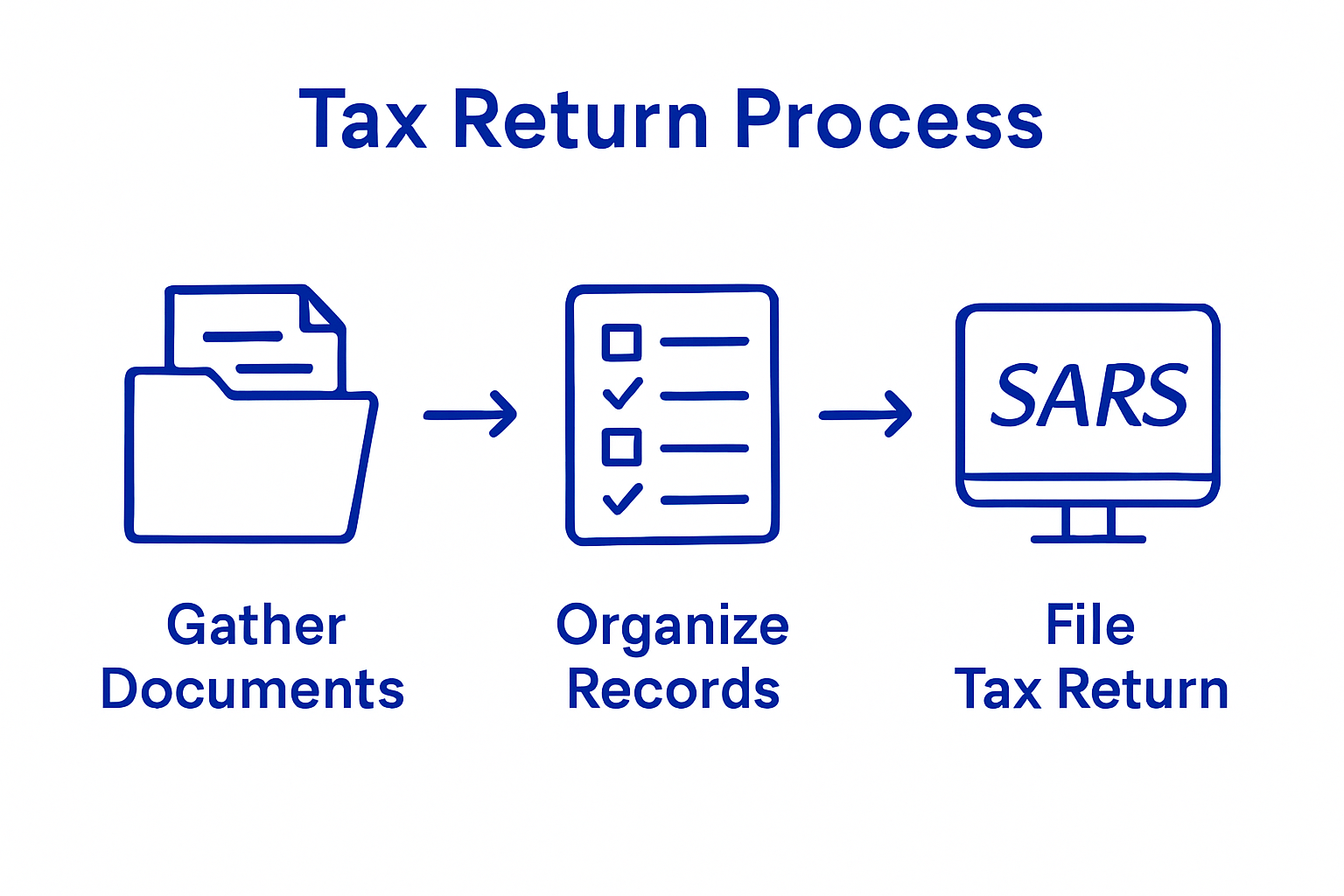
Preparing for tax season starts with meticulously collecting and organizing your financial documentation. This crucial first step sets the foundation for a smooth and accurate tax filing process. By systematically gathering your records, you minimize potential errors, reduce stress, and ensure compliance with SARS documentation requirements.
Begin by creating a dedicated folder or digital storage system where you can compile all essential financial documents. This might include physical files or a secure cloud storage solution that allows easy access and protection against loss. Recommended documents to collect include:
- IRP5/IT3(a) certificates from your employer
- Bank statements covering the entire tax year
- Investment and interest income certificates
- Medical scheme tax certificates
- Retirement annuity fund contribution documentation
- Travel logbooks for potential travel allowance claims
- Receipts for potential tax-deductible expenses
For employed professionals, obtaining your IRP5 certificate from your employer should be your first priority. Most companies distribute these documents electronically or through physical copies by the end of February. If you have multiple income sources, ensure you collect documentation from each source, including freelance work, rental income, or investment returns.
Digital tools can significantly simplify this process. Many banks and financial institutions now offer downloadable statements and consolidated annual financial summaries. Create a systematic approach by setting up a dedicated email folder or cloud storage directory specifically for tax-related documents. This approach not only helps you stay organized but also provides a secure backup of critical financial information.
Remember that SARS requires taxpayers to maintain financial records for a minimum of five years. Your comprehensive document collection isn’t just about current tax filing but also about maintaining a robust financial history. Taking time to gather and organize these documents thoroughly will streamline your tax preparation and provide peace of mind during the filing process.
Step 2: Organize Your Income and Expense Statements
Organizing your income and expense statements is a critical step in preparing for tax season that transforms scattered financial information into a clear, comprehensive financial picture. This process involves systematically categorizing and analyzing all your financial transactions to ensure accurate reporting and maximize potential tax deductions. By developing a strategic approach to financial documentation, you can significantly reduce the stress and complexity of tax filing.
Start by creating a comprehensive income tracking system that captures all revenue streams. This includes salary income, freelance earnings, rental income, investment returns, and any other financial inflows. Digital spreadsheet tools like Google Sheets or Microsoft Excel can be incredibly helpful for organizing these details. Separate each income source into distinct columns, recording the date, source, and exact amount. For those with multiple income streams, color-coding or using separate sheets for each source can provide additional clarity.
Parallel to income tracking, develop a robust expense categorization method. Explore our comprehensive guide on managing business expenses to refine your approach. Group your expenses into standard categories recognized by SARS, such as:
- Professional development and training
- Travel and transportation
- Office supplies and equipment
- Communication and technology costs
- Professional service fees
- Home office expenses
Capturing detailed documentation for each expense is crucial. Keep digital copies of receipts, invoices, and bank statements as supporting evidence. Many modern banking apps and accounting software offer automatic expense categorization and receipt scanning, which can dramatically simplify this process. For self-employed professionals or small business owners, maintaining a consistent and detailed record of business-related expenses can lead to significant tax deductions.
As you compile your financial information, cross-reference your records with bank statements, ensuring every transaction is accounted for and accurately categorized. This meticulous approach not only prepares you for tax season but also provides valuable insights into your overall financial health. By the end of this organization process, you should have a clear, chronological record of all income and expenses that can be easily translated into your tax return.
Step 3: Review Relevant Tax Regulations and Changes
Staying informed about the latest tax regulations is a critical component of successful tax preparation. Tax laws evolve annually, and understanding these changes can help you optimize your tax strategy, avoid potential penalties, and maximize potential deductions. This step requires a proactive approach to gathering current information directly from authoritative sources and understanding how new regulations might impact your specific financial situation.
SARS updates tax guidelines annually, which means taxpayers must remain vigilant about potential modifications to tax rates, deduction limits, and reporting requirements. Check out our comprehensive guide addressing top tax questions to help navigate these complex changes. Start by visiting the official SARS website, where comprehensive documentation and tax season guidelines are published. Pay special attention to any modifications in:
- Personal income tax rates
- Threshold adjustments for tax brackets
- Changes in medical tax credits
- Updated retirement annuity contribution limits
- Modifications to travel and home office expense deductions
For professionals with multiple income streams or complex financial portfolios, consulting a registered tax practitioner can provide invaluable insights. These experts stay current with legislative changes and can offer personalized advice tailored to your specific financial circumstances. They can help interpret technical language, identify potential opportunities for tax optimization, and ensure you’re fully compliant with the latest regulations.
Digital resources can significantly simplify this research process. Subscribe to SARS email newsletters, follow their official social media channels, and set up alerts for tax-related updates. Professional accounting websites and financial news platforms often provide summarized versions of tax regulation changes, making complex information more digestible. As you review these changes, take notes on how they might specifically impact your tax filing. Create a summary document highlighting key modifications relevant to your income type, ensuring you’re well-prepared when it’s time to complete your tax return.
Step 4: Choose the Right Cloud-Based Accounting Solution
Selecting an appropriate cloud-based accounting solution is a transformative step in streamlining your tax preparation process. The right digital tool can dramatically reduce manual work, minimize errors, and provide real-time financial insights that support strategic decision-making. Modern accounting solutions go far beyond simple bookkeeping, offering integrated features that can simplify complex financial management tasks.
Discover the comprehensive benefits of cloud accounting for business growth and understand how these platforms can revolutionize your financial management. When evaluating potential accounting solutions, focus on platforms that offer seamless integration with South African tax systems and provide robust reporting capabilities. Key considerations should include:
- Compatibility with SARS electronic filing requirements
- User-friendly interface and intuitive navigation
- Automated bank feed synchronization
- Comprehensive expense tracking
- Secure data storage and backup
- Multi-user access capabilities
- Responsive customer support
Carefully assess your specific business needs when selecting a cloud accounting platform. Sole proprietors might require different features compared to small businesses or freelance professionals. Look for solutions that offer scalability, allowing your accounting system to grow alongside your business. Most reputable cloud accounting platforms provide free trials, which present an excellent opportunity to test functionality before making a long-term commitment.
Prioritize platforms that offer robust security features, including two-factor authentication and encrypted data transmission. South African businesses must ensure their chosen solution complies with local data protection regulations. Pay attention to the platform’s ability to generate precise financial reports that align with SARS reporting standards. Many modern cloud accounting solutions now include built-in tax preparation tools that can automatically categorize expenses, track potential deductions, and generate comprehensive financial statements ready for tax submission.
Step 5: Prepare and File Your Tax Returns
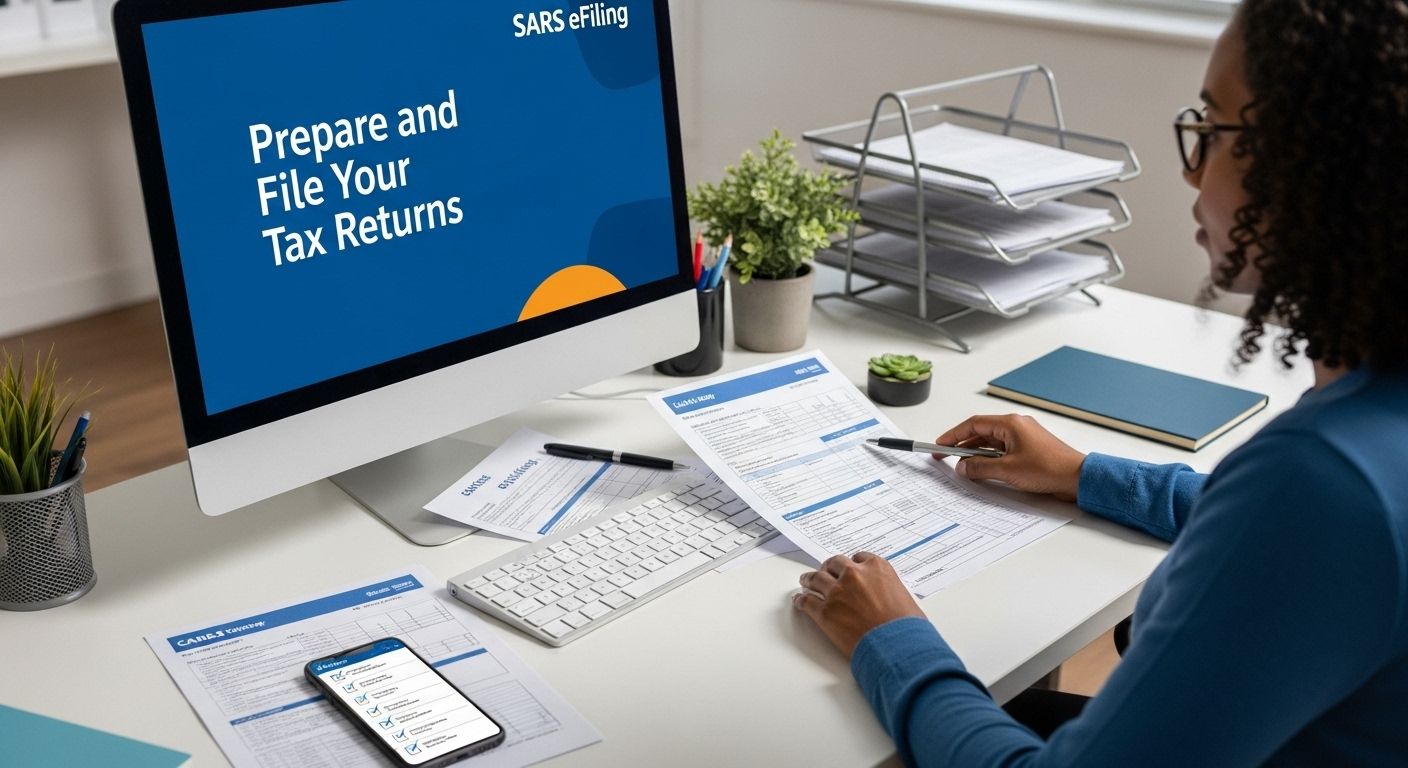
Filing your tax returns represents the culmination of all your careful preparation and organization. This critical step transforms your meticulously collected financial documents into an official submission to SARS, completing your annual tax compliance journey. Accuracy and timeliness are paramount when navigating this final stage of tax preparation.
Learn the essential steps for registering on SARS eFiling to ensure a smooth submission process. Begin by verifying your personal and financial information across all documents. Double-check that each income source, expense, and potential deduction is correctly recorded and matches the supporting documentation you have gathered. Pay special attention to:
- Matching IRP5 certificates with your income records
- Verifying medical expense claims
- Confirming retirement annuity contributions
- Checking travel and home office expense documentation
- Reconciling bank statements with reported income
The SARS eFiling platform offers multiple submission channels, including online submission, mobile app, and manual filing through a registered tax practitioner. If you are completing the return yourself, allocate sufficient uninterrupted time to carefully review each section of the ITR12 form. Many taxpayers find it beneficial to complete their return in multiple sessions, allowing for breaks and fresh perspective when reviewing complex sections.
Once you have submitted your return, retain a copy of all documentation for at least five years. SARS may request additional information or conduct a verification process, so maintaining comprehensive records is crucial. After submission, monitor your email and eFiling account for any communication from SARS regarding your assessment. Some taxpayers might receive an auto-assessment, while others may need to manually complete their return or provide additional supporting documentation. Patience and attention to detail during this final stage will help ensure a smooth and compliant tax filing experience.
Step 6: Verify Your Submission and Maintain Records
Verifying your tax submission and establishing a robust record-keeping system represents the final critical step in your tax preparation journey. This phase ensures not just compliance with SARS regulations, but also provides a strategic foundation for future financial planning and potential audits. Comprehensive documentation is your financial shield against potential future inquiries or complications.
Learn essential strategies for maintaining accurate financial records to protect your business and personal financial interests. Immediately after submission, download and save a complete digital copy of your tax return, including all supporting documentation. Create a systematic digital filing system that allows quick retrieval of documents, organizing files by tax year and document type. This approach transforms record-keeping from a mundane task into a strategic financial management practice.
- Scan and save all original physical documents
- Create multiple backup copies in secure locations
- Use consistent file naming conventions
- Store digital files in encrypted cloud storage
- Maintain a master index of all stored documents
The Tax Administration Act mandates that taxpayers retain financial records for a minimum of five years from the date of submission. This requirement applies to both digital and physical documentation. Consider implementing a comprehensive digital archive that includes tax returns, bank statements, income certificates, expense receipts, and investment documentation. Utilize cloud storage solutions with robust security features to ensure your documents remain safe, accessible, and protected against potential loss.
Regularly review your stored documents, removing outdated materials and ensuring your digital archive remains current and organized. Set calendar reminders to perform annual document audits, verifying that all necessary records are present and easily retrievable. By treating record maintenance as an ongoing process rather than an annual task, you create a resilient financial documentation system that supports long-term financial health and simplifies future tax preparations.
Below is a checklist table to help you verify your SARS tax return submission and ensure your financial records are accurately organised and maintained for the required period.
| Step | Action Required | Completed (Yes/No) |
|---|---|---|
| Download submitted return | Save a digital copy of your submitted tax return | |
| File supporting documentation | Organise receipts, certificates, and statements | |
| Backup copies | Create additional backups in secure cloud storage | |
| Name files consistently | Use clear file naming conventions by year and type | |
| Store physical documents | Scan and keep originals in a safe location | |
| Maintain a master index | List all stored records for easy retrieval | |
| Set yearly audit reminders | Schedule calendar alerts for annual document checks |
Eliminate Tax Season Stress and Gain Peace of Mind With Ready Accounting
Feeling overwhelmed trying to organise your financial records and stay compliant for the 2025 tax season? If collecting documents, tracking expenses, or keeping up with SARS regulations is causing you anxiety, you are not alone. The pressure to avoid costly mistakes and find time for proper preparation is real for many South African business owners. Yet, a streamlined tax filing experience is absolutely possible with the right support and tools. With Ready Accounting, you do not need to tackle this alone.

Let our team of local experts help you automate your accounting, stay on top of compliance, and prepare your business for every tax deadline. Whether you need guidance on cloud-based accounting solutions or want to simplify your SARS eFiling and record-keeping requirements, we offer tailored financial services that make tax time effortless. Visit Ready Accounting now and take the first step towards a worry-free tax season with a personal consultation. Prioritise your peace of mind and let us help you turn this taxing task into a manageable process today.
Frequently Asked Questions
What documents should I gather for tax season preparation?
You should collect key documents like your IRP5/IT3(a) certificates, bank statements, investment income certificates, medical scheme tax certificates, retirement annuity fund documentation, receipts for potential deductions, and any travel logbooks if applicable.
How long must I keep my financial records for tax purposes?
You are required to maintain your financial records for a minimum of five years according to SARS regulations. This includes all documentation related to your tax submissions.
What are some tips for organizing income and expenses for tax season?
Create a digital spreadsheet to track all income sources and categorize expenses according to SARS standards. Utilize digital tools that can automatically categorize transactions and maintain copies of receipts for easy reference.
Why is it important to stay updated with new tax regulations each year?
Tax laws change annually, and staying informed about these changes can help you optimize your tax strategy, avoid penalties, and take full advantage of applicable deductions.