
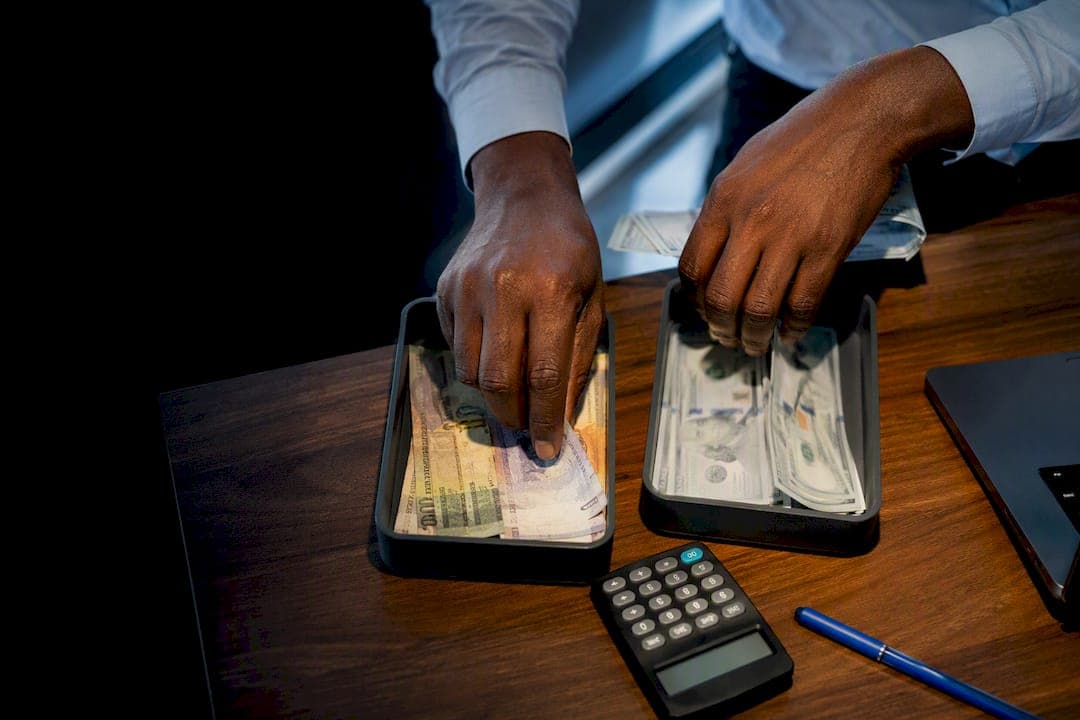
10% FX Move Can Wipe Profit Margin: Exchange Rate Impact for SA SMEs
10% FX Move Can Wipe Profit Margin: Exchange Rate Impact for SA SMEs

When the rand weakens, importers bleed and exporters cheer, but that’s only half the story: currency volatility itself, regardless of direction, chips away at investment, hiring and small-business margins. A stronger rand cuts input costs and tames inflation; a weaker one lifts export revenue but raises the cost of everything imported. For South African SMEs, the real danger isn’t the level of the rand. It’s not knowing which way it’s about to move.
Executive Summary
- Currency volatility impacts SMEs by causing rapid import cost increases and profit margin erosion, especially through transaction exposure.
- A 10% adverse exchange rate move can wipe out 100% of profit margins on certain foreign transactions.
- Long-term GDP growth from a 1% currency depreciation remains below 0.5%, with export demand influenced more by global income than the exchange rate.
- Managing exchange rate risk effectively involves operational strategies like currency matching and timing payments rather than relying on hedging instruments alone.
- Real-time cash flow monitoring and a disciplined treasury framework can significantly reduce the impact of currency swings on small business margins.
Table of Contents
- How does exchange rate impact affect trade, inflation and growth?
- Firm-level effects: transaction, translation and economic exposure
- What actually drives exchange rate movements?
- Measuring the real impact: short-run pain vs long-run adjustment
- How can SMEs and individuals manage exchange rate risk?
- The automation and treasury discipline gap most SMEs miss
- What the data actually tells SMEs to prioritize
- Protect your margins with Readyaccounting
- Sources
- FAQ
How does exchange rate impact affect trade, inflation and growth?
Currency depreciation makes imports more expensive and exports cheaper for foreign buyers, at least on paper. In practice, the effects of currency fluctuations on trade balances are smaller and slower than most business owners expect.
A weaker rand lifts the price of imported machinery, fuel, and raw materials almost immediately. That feeds straight into consumer prices, which is why the South African Reserve Bank watches the currency so closely when setting interest rates. Rising import costs push inflation up, prompting rate hikes, which then attract foreign capital seeking better returns and can push the currency back up again. It’s a loop, not a straight line.
Long-run research puts real numbers on this. A 1% depreciation of the exchange rate is associated with a South African GDP increase of less than 0.5%, a modest payoff for a lot of imported inflation. The same research found that export demand often responds more to foreign income growth than to the exchange rate itself. In other words, a cheaper rand helps you compete on price, but if your overseas customers aren’t buying, the discount doesn’t matter much.
- Depreciation raises import prices and inflation, often faster than it boosts export revenue
- Central banks respond to currency-driven inflation with interest rate changes, which then affect capital flows
- Foreign income and global demand frequently outweigh exchange rate effects on export volumes
- GDP gains from a weaker currency tend to be small and slow to materialize
Key finding: a 1% depreciation correlates with under 0.5% GDP growth in the long run, according to peer-reviewed research on South African exchange rate effects.
Firm-level effects: transaction, translation and economic exposure
Exchange rate fluctuations hit businesses through three distinct channels, and most SME owners only ever think about one of them.
Transaction exposure is the most immediate: it’s the gap between the exchange rate you quoted a client and the rate you actually get paid at, weeks or months later. Translation exposure shows up when consolidating foreign subsidiary accounts into rand for reporting purposes. Economic exposure is subtler and longer-term: your competitive position shifts because a rival’s costs (or prices) move with the currency even when yours don’t.
The transaction risk is where SMEs get hurt hardest. Research from the University of Pretoria found that a 10% adverse exchange-rate move can wipe out 100% of the profit margin on certain transactions, entirely erasing the deal’s profitability between signing the contract and collecting payment. That’s not a rounding error. That’s the whole margin, gone.
- Transaction exposure: the delay between quoting a price and settling payment
- Translation exposure: currency effects on consolidated financial statements
- Economic exposure: shifting competitiveness against foreign or currency-linked rivals
Firm-level studies from the United States confirm the pattern holds globally: exchange rate movements measurably affect exports, sales, profits and even stock returns across public companies, not just small exporters. If a listed multinational with treasury departments and hedging desks still feels the pinch, an SME with none of that infrastructure feels it worse.
Pro Tip: Map out exactly when in your contract-to-payment cycle you’re exposed. Most margin damage happens in the gap between invoicing and receiving payment, not at the moment you sign the deal.
What actually drives exchange rate movements?
Understanding the drivers behind currency exchange implications helps you anticipate moves instead of just reacting to them. Four forces matter most:
- Interest rate differentials. When the South African Reserve Bank raises rates relative to the US Federal Reserve or European Central Bank, capital tends to flow toward higher-yielding rand assets, strengthening the currency.
- Inflation and real exchange rate shifts. Persistently higher inflation than trading partners erodes purchasing power and tends to weaken the currency over time.
- Capital flows and risk sentiment. Political uncertainty, credit rating downgrades, or global risk aversion can trigger rapid capital outflows from emerging markets, South Africa included.
- Commodity prices. As a commodity exporter, South Africa’s currency often tracks gold, platinum and other commodity price cycles closely.
None of these operate alone. A rate hike during a commodity price slump can still leave the rand weaker, which is exactly why single-factor predictions of exchange rate impact usually fail.
Measuring the real impact: short-run pain vs long-run adjustment
The headline exchange rate you see on the news is nominal. What actually matters for competitiveness is the real effective exchange rate (REER), which adjusts for inflation differences against a basket of trading partners, and the nominal effective exchange rate (NEER), which strips out inflation entirely.
Short-run elasticities are almost always smaller than long-run ones. Businesses and consumers need time to shift suppliers, renegotiate contracts, or change buying habits, so the full effects of currency value change on trade and prices unfold over quarters, not days.
Volatility carries its own separate cost. Research on South African firms found that elevated exchange rate uncertainty reduces domestic investment for roughly two to seven quarters after a volatility spike. Separately, a one standard deviation increase in real exchange rate volatility has been linked to a 0.15 to 0.33 percentage point drop in manufacturing employment growth.
- REER and NEER matter more than the daily spot rate for judging real competitiveness
- Long-run elasticities of GDP and exports to currency moves exceed short-run ones
- Volatility, tracked through rolling standard deviation, predicts investment slowdowns independent of the rate’s direction
How can SMEs and individuals manage exchange rate risk?
You don’t need a treasury department to start protecting your margins. Start with the free stuff before you pay for hedges.
Operational fixes come first. Invoice in the currency that matches your cost base where possible. If you buy inputs in US dollars, try to also price sales in dollars, so the currency moves cancel out rather than compound. Time payments to your advantage where contracts allow flexibility, and build natural hedges by matching foreign currency inflows against outflows instead of converting everything back to rand immediately.

Financial instruments come next, once operational fixes run out. A forward contract locks in today’s rate for a future transaction, useful for predictable, sizable payments. Options cost more upfront (a premium) but let you benefit if the rate moves in your favor. Swaps suit ongoing, recurring exposure rather than one-off deals. The catch for most SMEs: banks typically require margin deposits worth roughly 10% of the contract value to open a forward position, which locks up cash many small businesses simply don’t have spare.
That cash constraint is exactly why so many SMEs do nothing at all and absorb the exposure instead of hedging it. A multicurrency account, netting foreign payments against foreign receipts, or working with a partner on safe currency-holding strategies can reduce exposure without tying up scarce margin capital.
- Match invoicing currency to your cost base wherever contracts allow it
- Net foreign inflows against outflows before converting to rand
- Reserve forwards and options for large, predictable exposures, not every transaction
- Track cash flow weekly if more than 20% of revenue or costs sit in foreign currency
Pro Tip: If FX losses have shown up in three consecutive months of management accounts, that’s your signal to escalate from ad-hoc decisions to a written hedging policy, ideally with a fractional CFO setting the approval thresholds.
You’ll know it’s time to call in specialist help when margin erosion becomes a pattern rather than a one-off, when a single foreign currency contract represents a meaningful share of annual revenue, or when your cash flow forecasts keep missing because of currency swings you didn’t see coming.
The automation and treasury discipline gap most SMEs miss
Real-time cash and runway dashboards catch currency exposure while there’s still time to act, not after the invoice has already been discounted by an unfavorable rate. That’s the gap Readyaccounting sees constantly: businesses reacting to FX losses in hindsight instead of setting policy in advance.
A fractional CFO turns scattered hedging decisions into a disciplined framework, complete with defined forecast windows, margin buffers, and clear approval thresholds for when a forward contract makes sense versus when it doesn’t.
What the data actually tells SMEs to prioritize
Here’s where the conventional advice on exchange rate impact goes wrong: it obsesses over predicting direction. Will the rand strengthen or weaken next quarter? Nobody reliably knows, including the economists paid to guess. What the research consistently supports is a different priority: reducing exposure to volatility itself, regardless of which way the currency eventually moves.
The finding that 37.5% of South African SMEs report direct currency impact, with another 33.8% affected indirectly, tells you this isn’t a niche problem for exporters alone. It touches import-dependent retailers, tech companies paying for offshore software subscriptions, and manufacturers buying foreign components.
My honest read: most SME owners either over-invest in guessing the rand’s next move or under-invest in the boring operational fixes, currency matching, payment timing, cash flow visibility, that would protect them regardless of direction. Fix the boring stuff first. Forecasting comes second, and forecasting perfectly comes never.
— Johan
Protect your margins with Readyaccounting
Some firms replace the guessing game with real-time visibility. Instead of discovering an FX loss when your accountant reconciles the books three months later, cloud infrastructure and fractional CFO oversight can flag currency exposure while there’s still a window to act, whether that means adjusting payment timing, tightening approval thresholds, or simply forecasting cash flow with enough lead time to plan around a weak rand rather than absorb the hit.
We build the automated cash flow systems that catch margin erosion before it compounds across a full financial year, paired with SARS-compliant reporting and Annual Financial Statement that hold up under scrutiny. If currency swings have been eating into your margins without a clear pattern you can point to, consider consulting a financial advisory service for help building a treasury policy that fits your cash position, not a textbook one.
This article is general information, not a substitute for advice from a qualified financial advisor. Consult a qualified financial professional about your own circumstances before acting on anything here.
Sources
- Turning currency chaos into opportunity: A guide for SMEs - Moneyweb
- University of Pretoria repository — SME foreign-exchange exposure study
- Springer article (2024) on exchange rate effects
- When exchange rates move, U.S. companies feel it — Anderson Review (UCLA)
FAQ
What are the main impacts of exchange rates on businesses?
Exchange rate moves change import and export prices, squeeze or expand profit margins on foreign currency transactions, and shift competitiveness against foreign rivals. A 10% adverse move can eliminate an entire deal’s profit margin.
What happens to prices when the exchange rate is high?
A “high” or strong local currency makes imports cheaper, which can ease inflation, but it also makes exports pricier for foreign buyers, hurting export-driven businesses. The net effect on GDP tends to be modest, under 0.5% for every 1% currency move in the long run.
What factors most influence exchange rate movements?
Interest rate differentials between central banks, inflation trends, capital flow shifts driven by risk sentiment, and commodity prices for commodity-exporting economies all move exchange rates. No single factor dominates consistently.
How does currency volatility affect small businesses differently than large ones?
Small businesses typically lack in-house treasury expertise and the cash reserves needed for hedging margin deposits, which run around 10% of contract value. Many end up absorbing losses that larger firms would hedge away.
Should individuals worry about exchange rate fluctuations too?
Yes, especially anyone buying imported goods, traveling, paying for overseas services, or holding foreign investments. Currency diversification and timing large purchases around favorable rate windows are the two most accessible tools for individuals.